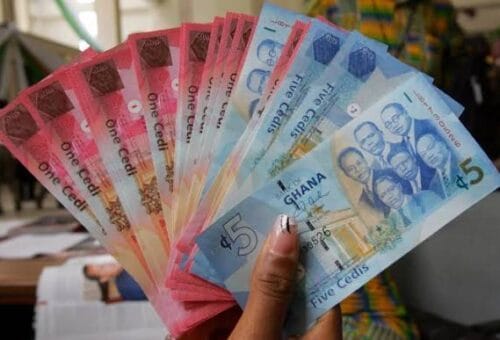
Ghana Gold for Oil Policy: 5 Critical 2026 Impacts
Ghana gold for oil policy 2026 is reshaping fuel prices & business costs. Discover 5 critical impacts every Ghanaian business owner must know now.

Could a bold barter deal between Ghana’s government and international oil suppliers be the key to stabilizing fuel prices — or is it a ticking economic time bomb? Ghana’s Gold for Oil policy 2026 is making headlines again, and if you run a business, drive a commercial vehicle, or simply fill a tank, this affects you directly. Here’s everything you need to know.
What Is Ghana’s Gold for Oil Policy?
Launched initially in late 2022 under the Akufo-Addo administration and restructured under President John Mahama’s government in 2025–2026, the Gold for Oil policy allows Ghana to exchange gold — one of its most abundant natural resources — for petroleum products instead of spending scarce US dollars.
The core logic is straightforward: Ghana mines significant quantities of gold, yet historically paid for fuel imports in dollars, draining foreign exchange reserves. By bartering gold for oil, the government aims to reduce pressure on the cedi and keep pump prices more stable.
According to the Bank of Ghana, foreign exchange outflows for energy imports have historically been one of the largest drains on the country’s reserves. The Gold for Oil arrangement is designed to plug that gap directly.
Where Does the Policy Stand in 2026?
In early 2026, the Mahama administration reaffirmed its commitment to the Gold for Oil framework, with the Ghana National Petroleum Corporation (GNPC) and the Precious Minerals Marketing Company (PMMC) playing central roles in executing the barter transactions.
Reports from the Ghana Revenue Authority and energy sector analysts indicate that the policy has been expanded to cover a broader volume of crude oil and refined petroleum imports compared to its initial pilot phase. However, execution challenges — including gold valuation disputes and logistical bottlenecks — have slowed full-scale deployment.
Key Milestones in 2025–2026
- GNPC signed expanded barter agreements with at least two Gulf-based energy suppliers in Q4 2025.
- PMMC increased its gold aggregation capacity to meet higher volume demands from the policy.
- The National Petroleum Authority (NPA) adjusted its pricing formula to partially reflect savings from the gold-for-oil arrangement.
- Parliament approved additional regulatory oversight to improve transparency in gold valuation for barter deals.
How Ghana Fuel Prices 2026 Are Being Affected
Ghana’s fuel prices in 2026 remain a sensitive subject. Petrol and diesel prices at the pump are reviewed bi-weekly by the National Petroleum Authority (NPA), and the Gold for Oil policy has introduced a new variable into that equation.
In the first quarter of 2026, industry observers noted that pump prices have been relatively more stable compared to the extreme volatility of 2022–2023, though they remain elevated in cedi terms due to ongoing currency depreciation pressures.
Current Pump Price Trends
As of early 2026, petrol prices in Accra hover around GH₵18–GH₵22 per litre depending on the fuel station and brand, while diesel ranges between GH₵19–GH₵24 per litre. These figures reflect the combined effect of global crude oil prices, the cedi-dollar exchange rate, and partial savings from the Gold for Oil arrangement.
Energy economists suggest that without the Gold for Oil policy, pump prices could have been 8–12% higher during periods of cedi weakness — though these estimates vary by analyst and market conditions.
Impact on Ghana Business Costs 2026
For small business owners, transporters, and manufacturers, Ghana business costs in 2026 are directly tied to fuel. Fuel is an input cost in nearly every sector — from food distribution to construction to retail logistics.
Transport and Logistics Sector
Commercial drivers and transport unions have cautiously welcomed the policy’s stabilizing effect, but many report that fares and freight charges remain high because pump prices are still elevated in absolute terms. The Ghana Private Road Transport Union (GPRTU) has indicated that any meaningful fare reductions depend on sustained pump price stability over multiple pricing windows.
Manufacturing and Retail
Factory operators who rely on diesel generators — a common reality in Ghana’s power landscape — are watching the policy closely. Stable diesel prices directly reduce operational costs for businesses that cannot rely solely on the national grid. how to reduce energy costs for small businesses in Ghana
Agriculture and Food Supply
Farmers and agribusiness operators depend on fuel for irrigation pumps, tractors, and transportation of produce. Any reduction in fuel cost volatility has a downstream effect on food prices at the market — a critical concern for everyday Ghanaians and parents managing household budgets.
Expert Opinions: Is the Policy Sustainable?
Economists and energy policy analysts hold mixed views on the long-term sustainability of Ghana’s Gold for Oil arrangement. Supporters argue it is a creative use of natural resource wealth to solve a structural foreign exchange problem.
Critics, however, point to several vulnerabilities:
- Gold price volatility: Global gold prices fluctuate, meaning the volume of oil Ghana can barter for changes constantly.
- Transparency concerns: Civil society groups have raised questions about how gold is valued in barter transactions and whether Ghana is getting fair market rates.
- Artisanal mining risks: Sourcing enough gold for large-scale barter deals may incentivize galamsey (illegal small-scale mining), worsening environmental damage.
- Dependency risk: Over-reliance on a single barter mechanism could leave Ghana exposed if gold markets shift or supplier relationships break down.
The International Monetary Fund’s Ghana country page has noted that structural reforms in energy pricing and foreign exchange management remain critical for long-term macroeconomic stability, alongside any barter arrangements.
What Should Small Business Owners Do Right Now?
Understanding the policy is one thing — acting on it is another. Here are concrete steps businesses can take in 2026 to manage fuel-related costs strategically. cost management strategies for small businesses in Africa
- Hedge your fuel costs: Where possible, negotiate fixed-rate fuel supply contracts with petroleum distributors to lock in prices during stable periods.
- Monitor NPA announcements: The NPA publishes bi-weekly pump price reviews. Set a calendar reminder to review these and adjust your pricing or logistics costs accordingly.
- Diversify energy sources: Invest in solar or hybrid energy solutions to reduce diesel generator dependency — a growing trend among Ghanaian SMEs in 2026.
- Build fuel cost buffers into pricing: Don’t wait for price shocks. Build a 10–15% fuel cost contingency into your product or service pricing model.
- Join sector associations: Bodies like GPRTU or the Association of Ghana Industries (AGI) often negotiate collective fuel arrangements and provide early policy intelligence.
Key Takeaways
- Ghana’s Gold for Oil policy in 2026 is an active, expanding barter arrangement aimed at reducing dollar outflows for fuel imports.
- Pump prices remain elevated but show greater stability compared to 2022–2023 volatility peaks.
- Small businesses, transporters, and manufacturers benefit most from price predictability, not just price levels.
- The policy faces sustainability questions around gold valuation transparency, environmental risks, and global commodity price swings.
- Proactive cost management — including fuel hedging, solar adoption, and NPA monitoring — is the best defense for Ghanaian businesses in 2026.
Frequently Asked Questions
How does Ghana’s Gold for Oil policy actually work in practice?
Ghana’s government, through the GNPC and PMMC, aggregates gold from licensed miners and uses it as payment to international oil suppliers instead of US dollars. The gold is valued at prevailing international market rates, and the equivalent volume of crude oil or refined petroleum is delivered to Ghana. This bypasses the need to convert cedis to dollars for fuel purchases, preserving foreign exchange reserves.
Has the Ghana Gold for Oil policy actually reduced fuel prices at the pump?
Not dramatically in absolute terms. The policy’s primary impact has been moderating price increases rather than causing significant price drops. Analysts suggest it has helped prevent pump prices from rising as sharply as they would have during periods of cedi depreciation, but global crude oil prices and local taxes still heavily influence what consumers pay at the pump.
What are the biggest risks of the Gold for Oil policy for Ghana’s economy in 2026?
The main risks include gold price volatility affecting barter volumes, transparency concerns in gold valuation, potential encouragement of illegal galamsey mining to meet gold supply demands, and the risk of over-dependence on a single policy mechanism for energy security. Economists recommend the policy be complemented by broader energy sector reforms.
How should Ghanaian small business owners plan for fuel price changes in 2026?
Business owners should monitor the NPA’s bi-weekly fuel price reviews, negotiate fixed-rate fuel supply agreements where possible, build fuel cost contingencies into their pricing models, and consider investing in alternative energy sources like solar to reduce dependence on diesel. Joining industry associations also provides collective bargaining power and early policy intelligence.
Where can I get the most up-to-date information on Ghana fuel prices in 2026?
The most reliable sources are the National Petroleum Authority (NPA) at npa.gov.gh, which publishes official bi-weekly pump price reviews, and the Bank of Ghana at bog.gov.gh for foreign exchange and macroeconomic data. Industry publications from the Association of Ghana Industries (AGI) also provide sector-specific analysis on how fuel costs are affecting businesses.