Bank of Ghana Gold Reserve Strategy: 5 Proven Wins in 2026
Bank of Ghana gold reserve strategy 2026 is proving critics wrong. See how gold price volatility, E&P's $1.2B investment & policy reforms validate BoG's vision.


Could a central bank’s most criticized policy become its greatest vindication? In 2026, as gold prices continue their volatile climb and global currency pressures mount, the Bank of Ghana’s gold reserve strategy is emerging as one of the most prescient fiscal decisions in West African economic history. Here is what the data — and recent events — are telling us.
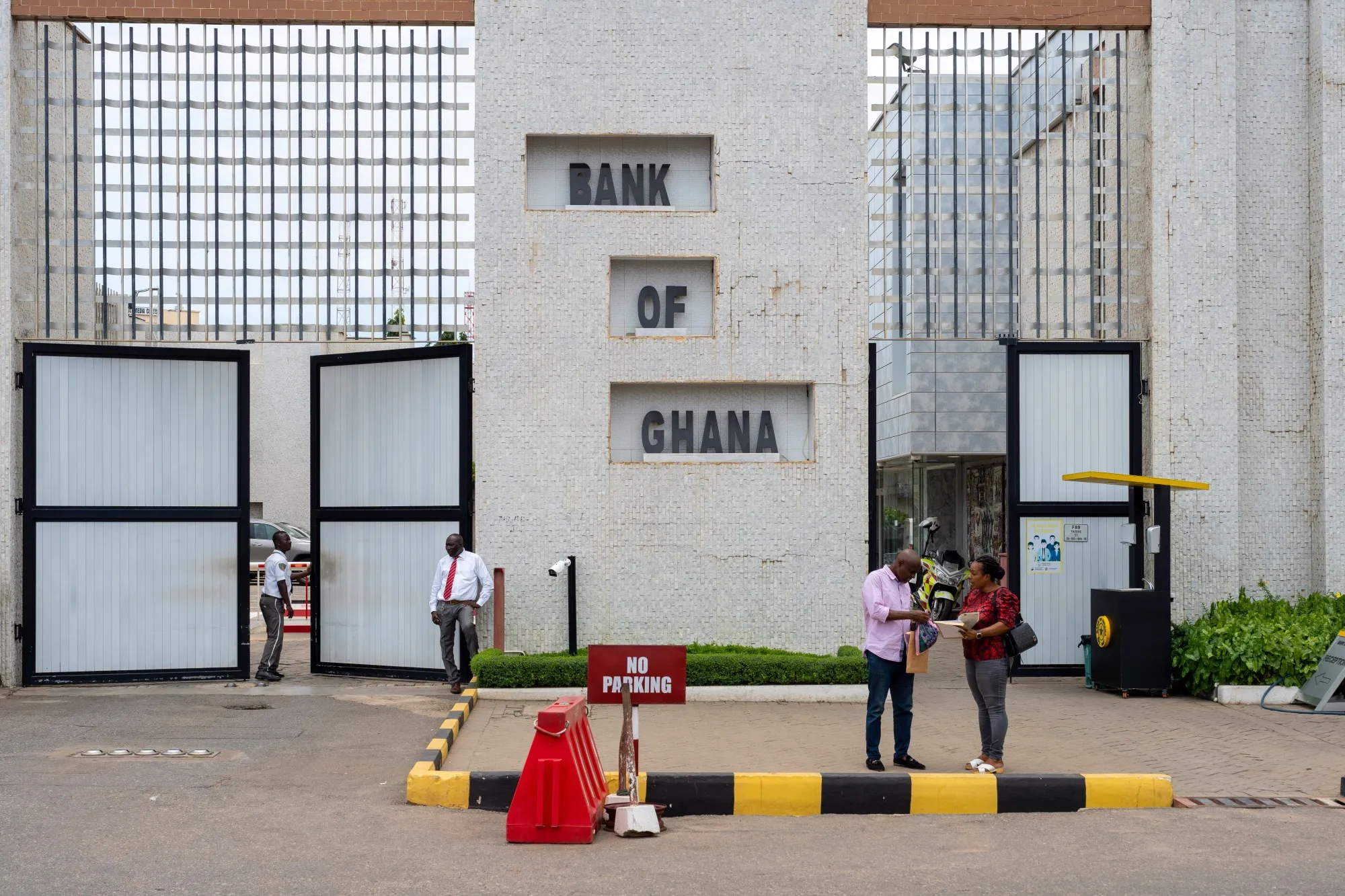
The BoG Reserve Policy: What Critics Got Wrong
For years, skeptics questioned the BoG reserve policy, arguing that accumulating physical gold was an archaic hedge in a world of digital finance. Critics pointed to storage costs, liquidity constraints, and the opportunity cost of capital tied up in bullion rather than yield-bearing instruments.
Those arguments have not aged well. With gold trading well above the $2,800 per troy ounce threshold in 2026 — a level that would have seemed speculative even three years ago — Ghana’s balance sheet is looking considerably more resilient than many of its regional peers. You can track live gold benchmarks via the London Bullion Market Association for real-time context.
Gold Price Volatility in Ghana 2026: The Macro Context
Gold price volatility in Ghana 2026 is not happening in isolation. Geopolitical tensions, persistent dollar uncertainty, and central bank buying sprees across emerging markets have all contributed to a structurally elevated gold price environment.
According to the World Gold Council, central banks globally purchased over 1,000 tonnes of gold annually in both 2023 and 2024, a trend that has continued into 2026. Ghana, as a major gold producer, positioned itself early to benefit from exactly this dynamic.
Why Volatility Actually Favors Ghana’s Position
Counterintuitively, price swings work in Ghana’s favor when reserves are held in physical gold rather than paper contracts. Each upward spike directly inflates the book value of the Bank of Ghana’s reserves, providing immediate balance-of-payments relief.
Downward corrections, while concerning, are buffered by Ghana’s dual advantage: the country both mines and holds gold, meaning export revenues and reserve values move in tandem. This is a structural hedge that few economies can replicate.
E&P’s $1.2 Billion Investment in Tarkwa and Damang Mines
The strategic logic of the Ghana gold reserves 2026 story received a major private-sector endorsement when E&P announced a $1.2 billion investment in the Tarkwa and Damang mines. This capital commitment signals long-term confidence in Ghana’s gold sector at precisely the moment when reserve valuations are peaking.
The Damang Mine handover countdown — a closely watched transition in Ghana’s mining calendar — is now proceeding against a backdrop of renewed investor appetite. Industry analysts note that the timing of this investment aligns with the government’s broader strategy to deepen domestic value capture from gold extraction. For more on Ghana’s extractive sector governance, see our Ghana mining sector investment outlook.
What the Damang Handover Means for Reserve Strategy
As the Damang Mine approaches its handover milestone, the Bank of Ghana’s ability to negotiate favorable terms for domestic gold purchases — a policy it has actively pursued — becomes even more critical. Securing a percentage of mined output at preferential rates directly feeds the reserve accumulation pipeline.
This is not theoretical. Ghana’s domestic gold purchase program, which requires miners to sell a portion of output to the central bank in cedis, has been a cornerstone of the reserve-building strategy that critics once dismissed.
Ghana Economic Stability 2026: The Broader Picture
Ghana economic stability in 2026 cannot be assessed without acknowledging the convergence of several positive policy signals happening simultaneously. Beyond gold, the government is pursuing structural reforms that reinforce the reserve strategy’s effectiveness.
SIM Registration Reforms and Digital Identity
SIM registration reforms are strengthening Ghana’s digital identity infrastructure, which has direct implications for financial inclusion and the formalization of the gold trading economy. A more traceable, accountable digital financial system reduces illicit gold flows and ensures more of the country’s gold wealth stays within the formal banking system.
This connects directly to the Bank of Ghana’s broader mandate. A stronger digital identity framework means more Ghanaians can participate in formal gold savings products, deepening the domestic market for the very asset underpinning the reserve strategy. Review our Ghana digital financial inclusion strategy for the full policy context.
Bank of Ghana CISD 2026 Cybersecurity Directive
The Bank of Ghana’s CISD 2026 Cybersecurity Directive is another piece of the stability puzzle. As Ghana’s financial infrastructure becomes more sophisticated — and as gold reserve management increasingly relies on digital systems — protecting that infrastructure is non-negotiable.
The directive mandates enhanced security protocols for financial institutions, ensuring that the digital rails supporting Ghana’s reserve management and gold trading systems are resilient against increasingly sophisticated cyber threats. This is governance maturity in action.
Counter-Terrorism Framework and Mineral Security
Ghana’s review of its counter-terrorism framework in 2026 has a direct, if underappreciated, connection to gold reserve strategy. Illegal mining — galamsey — and the financing of armed groups through illicit mineral trade represent real threats to the integrity of Ghana’s gold supply chain.
A strengthened counter-terrorism and security framework protects the physical infrastructure of Ghana’s gold sector, from mine sites to transport corridors to the Bank of Ghana’s own vaults. Security and economic strategy are inseparable in this context. The Financial Action Task Force has consistently highlighted mineral-linked financial crime as a priority area for emerging market economies.
Black Stars, Soft Power, and Economic Confidence
It may seem tangential, but Ghana’s Black Stars facing Austria in a World Cup warm-up match is part of a broader narrative of national confidence and international visibility. Soft power and economic credibility are more connected than economists typically acknowledge.
A Ghana that is fiscally stable, internationally engaged, and projecting confidence — on the pitch and in the boardroom — attracts the foreign direct investment and institutional trust that reinforces the cedi’s position. Economic psychology matters, and Ghana is currently projecting strength on multiple fronts. See our Ghana foreign direct investment trends 2026 for the investment climate data.
5 Proven Wins from the BoG’s Reserve Strategy
- Balance-of-payments resilience: Gold reserves have directly offset pressure on the cedi during periods of dollar strength.
- Debt negotiation leverage: Higher reserve valuations improve Ghana’s creditworthiness in international debt restructuring discussions.
- Investor confidence signal: E&P’s $1.2 billion commitment reflects trust in Ghana’s macroeconomic management.
- Domestic policy coherence: The gold purchase program, SIM reforms, and cybersecurity directive form a mutually reinforcing policy ecosystem.
- Regional leadership: Ghana is now cited as a model for other gold-producing nations considering similar reserve strategies, per IMF World Economic Outlook commentary on Sub-Saharan Africa.
Key Takeaways
- The Bank of Ghana’s gold reserve strategy, once criticized, is delivering measurable fiscal benefits in 2026’s volatile gold price environment.
- E&P’s $1.2 billion investment in Tarkwa and Damang mines validates long-term confidence in Ghana’s gold sector.
- The Damang Mine handover, SIM registration reforms, and the CISD Cybersecurity Directive are all reinforcing the same strategic direction: a more formalized, resilient Ghanaian economy.
- Gold price volatility, counterintuitively, strengthens Ghana’s position due to its dual role as producer and reserve holder.
- Counter-terrorism and digital identity reforms protect the integrity of the gold supply chain that underpins the entire strategy.
Conclusion
The Bank of Ghana’s reserve strategy was never just about gold — it was about building a sovereign buffer against the unpredictability of global markets, and 2026 is proving that bet correct. Policymakers, investors, and analysts watching Ghana should study this convergence of mining investment, digital reform, security policy, and reserve management as a replicable model for resource-rich economies.
The immediate actionable step: if you are an investor or policymaker, revisit your assumptions about commodity-backed reserve strategies — Ghana’s 2026 playbook deserves serious, detailed analysis.
Frequently Asked Questions
What is the Bank of Ghana’s gold reserve strategy?
The Bank of Ghana’s gold reserve strategy involves systematically accumulating physical gold — including through a domestic gold purchase program requiring miners to sell a portion of output to the central bank — to build sovereign reserves that protect the cedi and strengthen Ghana’s balance-of-payments position. In 2026, this strategy is being vindicated by elevated global gold prices.
How does gold price volatility affect Ghana’s economy in 2026?
Because Ghana is both a major gold producer and a gold reserve holder, price volatility has a dual effect: upward swings increase both export revenues and the book value of central bank reserves, while downward corrections are partially offset by lower production costs. This structural hedge makes Ghana more resilient than economies that merely trade gold without holding it in reserves.
What is the significance of E&P’s $1.2 billion investment in Tarkwa and Damang?
E&P’s $1.2 billion commitment to the Tarkwa and Damang mines is a major vote of confidence in Ghana’s gold sector and macroeconomic management. It signals that international investors view Ghana’s mining governance and fiscal environment as stable enough to justify long-term capital allocation at a time of global uncertainty.
How does the Bank of Ghana’s CISD 2026 Cybersecurity Directive relate to reserve management?
As gold reserve management and financial transactions increasingly rely on digital infrastructure, cybersecurity becomes a direct component of reserve strategy integrity. The CISD 2026 directive mandates enhanced security protocols across financial institutions, protecting the digital systems that support Ghana’s gold trading, reserve accounting, and monetary policy operations.
What lessons can other countries learn from Ghana’s BoG reserve policy?
The primary lesson is that commodity-backed reserve strategies require long-term political commitment to withstand short-term criticism. Ghana’s experience demonstrates that pairing physical gold accumulation with complementary reforms — digital identity, cybersecurity, counter-terrorism, and mining governance — creates a mutually reinforcing framework for economic resilience that outperforms single-instrument approaches.