Damang Mine Handover 2026: 5 Critical Gains for Ghana
Damang Mine handover 2026 explained: timeline, stakeholders, $1.2B investment impact, and what Ghana's gold mining sector stands to gain. Read now.

With the Damang Mine handover 2026 countdown now firmly underway, Ghana stands at a pivotal crossroads that could redefine its gold mining sector for decades. This article breaks down the transition timeline, key stakeholders, economic opportunities, and risks every decision-maker in Ghana’s mining ecosystem needs to understand right now.
The Damang Mine Handover: A Historic Milestone for Ghana
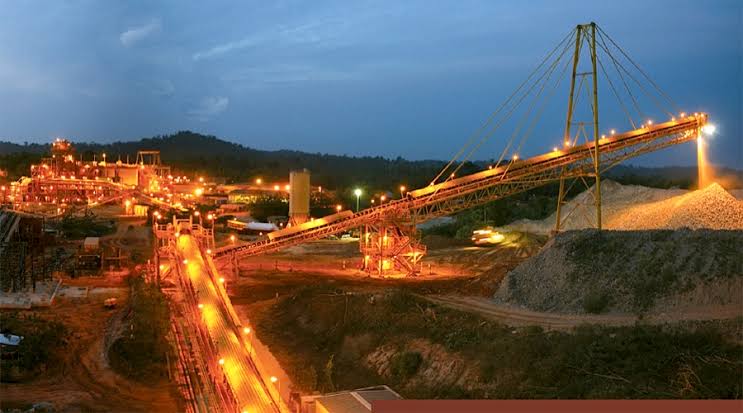
The Damang Mine Ghana transition represents one of the most consequential shifts in the country’s resource governance history. Located in the Western Region, Damang has been a cornerstone of Ghana’s gold output, operated by Gold Fields Ghana Limited under a lease arrangement with the government.
As the lease approaches its terminal phase in 2026, the Ghanaian government — through the Minerals Commission and the Ministry of Lands and Natural Resources — is orchestrating a structured handover designed to protect national interests while maintaining operational continuity.
Key Stakeholders Driving the Ghana Mining Transition
Understanding who holds influence in this process is essential for investors, policymakers, and community leaders alike.
- Gold Fields Ghana Limited: The incumbent operator responsible for current production, environmental remediation commitments, and asset transfer protocols.
- Ghana National Petroleum Corporation (GNPC) and Minerals Income Investment Fund (MIIF): State entities positioned to take equity stakes in the post-handover structure.
- Local Communities in Tarkwa-Nsuaem: Stakeholders with legitimate claims to resettlement compensation, community development funds, and employment continuity.
- Environmental Protection Agency (EPA) Ghana: Oversees compliance with reclamation bonds and environmental closure plans.
- E&P (Exploration and Production) Investors: Notably, recent announcements confirm a $1.2 billion investment commitment in Tarkwa and Damang Mines, signaling strong private sector confidence in the post-handover landscape.
The $1.2 Billion Signal: E&P’s Investment Vote of Confidence
The announcement of a $1.2 billion investment in Tarkwa and Damang Mines by E&P is arguably the most bullish signal for Ghana’s gold mining sector in years. This capital commitment covers mine life extension drilling, processing plant upgrades, and tailings storage facility modernization.
For context, Damang’s proven and probable reserves have historically exceeded 2 million ounces. With sustained capital injection, industry analysts expect production to remain viable well into the 2030s, making the handover a transfer of a productive — not exhausted — asset.
You should also review Ghana’s broader mining investment policy framework to understand how this capital flows within the regulatory structure.
Gold Price Volatility and the Bank of Ghana’s Reserve Strategy
The timing of the Damang handover coincides with a period of notable gold price volatility, which paradoxically strengthens Ghana’s negotiating position. The Bank of Ghana’s domestic gold purchase program — launched as part of its reserve diversification strategy — has proven prescient.
By accumulating gold reserves at strategic price points, the BoG has insulated the cedi from external shocks while building a sovereign buffer. As gold prices fluctuate between $2,200 and $2,600 per troy ounce in 2026 (per World Gold Council market data), the state’s ownership of a producing mine like Damang becomes a direct hedge against currency depreciation.
This reserve strategy, combined with the handover, creates a compounding benefit: Ghana earns royalties during the transition and gains full operational upside thereafter.

What the Damang Mine Handover Means for National Revenue
The Ghana gold mining sector contributes approximately 30–35% of the country’s total export revenues, according to the Ghana Chamber of Mines. Damang alone has historically generated hundreds of millions in annual royalties, corporate taxes, and surface rental fees.
Post-handover, the revenue model shifts significantly:
- Increased royalty capture: State ownership eliminates profit repatriation to foreign shareholders, retaining more value domestically.
- Employment continuity: A managed transition preserves an estimated 2,000+ direct jobs and thousands of indirect livelihoods in the Tarkwa-Nsuaem district.
- Local procurement mandates: New operational agreements are expected to enforce stricter local content requirements under Ghana’s Minerals and Mining Act.
- Community development levies: Renegotiated community development agreements (CDAs) could channel additional funds into local infrastructure.
- Sovereign wealth accumulation: MIIF’s equity participation means dividends flow into Ghana’s long-term investment fund.
Risks Ghana Must Manage in the Mining Handover Countdown
No transition of this scale is without risk. Decision-makers must proactively address several pressure points.
Operational Continuity Risk
A gap in management expertise during the transition could disrupt production schedules. Ghana must ensure technical knowledge transfer agreements are embedded in the handover deed — not left to goodwill.
Environmental Liability
Damang’s decades of operation leave a complex environmental footprint. Reclamation bond adequacy and EPA sign-off on closure plans must be verified before asset transfer is finalized. Inheriting unquantified environmental liabilities would be a costly governance failure.
Security and Counter-Terrorism Considerations
Ghana’s ongoing review of its counter-terrorism framework has direct implications for mining security. The Western Region, while stable, requires robust perimeter security protocols and coordination with the Ghana Armed Forces to protect critical mineral infrastructure during the transition window.
Learn more about how Ghana’s security reforms intersect with natural resource protection strategies in the current policy environment.
Cybersecurity and Digital Infrastructure
The Bank of Ghana’s CISD 2026 Cybersecurity Directive signals a broader national push to secure critical infrastructure. Mining operations increasingly rely on digital control systems, IoT-connected equipment, and cloud-based data management. The Damang handover must include a cybersecurity audit of all operational technology (OT) systems to prevent vulnerabilities during the ownership transition.
Per Bank of Ghana guidance, financial institutions and critical infrastructure operators are now required to meet enhanced cybersecurity standards — a mandate that extends logically to state-operated mines.
Digital Identity, SIM Registration, and the Mining Workforce
Ghana’s SIM registration reforms — designed to strengthen digital identity verification — have a practical application in the mining transition. A verified digital identity framework enables more efficient payroll systems, contractor vetting, and community benefit distribution for Damang’s workforce.
Biometric-linked SIM registration reduces ghost worker fraud, a documented challenge in large-scale public sector workforce transitions. This reform, while seemingly unrelated, directly supports the governance integrity of the handover process.
Black Stars, National Morale, and the Timing Advantage
Ghana’s Black Stars face Austria in a World Cup warm-up match in 2026 — a detail that may seem tangential but reflects a broader national confidence moment. Major economic transitions benefit from positive national sentiment. The convergence of a high-profile football moment with a landmark mining handover creates a unique communications opportunity for the government to build public buy-in for the transition narrative.
Effective stakeholder communication — framing the Damang handover as a national victory — is an underutilized tool in resource governance. Review how other nations have managed public communication strategies for mining transitions to extract lessons applicable to Ghana’s context.
Key Takeaways
- The Damang Mine handover 2026 is one of Ghana’s most significant resource governance milestones, transferring a productive gold asset to state management.
- A confirmed $1.2 billion E&P investment in Tarkwa and Damang signals strong private sector confidence in the post-handover future.
- The Bank of Ghana’s gold reserve strategy and the Damang transition create compounding revenue benefits for the national economy.
- Key risks — operational continuity, environmental liability, cybersecurity, and security — must be proactively managed in the handover deed.
- SIM registration reforms and the CISD 2026 Cybersecurity Directive provide governance tools that directly support a clean, fraud-resistant transition.
- Local communities in Tarkwa-Nsuaem stand to benefit from renegotiated CDAs, employment continuity, and enhanced local content mandates.
Frequently Asked Questions
What is the Damang Mine handover 2026 and why does it matter?
The Damang Mine handover 2026 refers to the structured transfer of operational control and ownership of the Damang gold mine in Ghana’s Western Region from Gold Fields Ghana Limited back to Ghanaian state entities as the mining lease reaches its terminal phase. It matters because Damang is a producing asset with significant remaining reserves, and the transition determines how Ghana captures long-term value from its own mineral wealth.
How will the handover affect Ghana’s national revenue?
Post-handover, Ghana eliminates profit repatriation to foreign shareholders, retains full royalty and dividend streams domestically, and gains direct operational upside from gold price appreciation. Combined with the Bank of Ghana’s reserve strategy, this creates a compounding fiscal benefit for the national treasury.
What role does the $1.2 billion E&P investment play in the Damang transition?
The $1.2 billion investment commitment by E&P in Tarkwa and Damang Mines signals that private capital views the post-handover environment as viable and profitable. This investment funds mine life extension, processing upgrades, and infrastructure modernization — ensuring Damang remains a productive asset well into the 2030s rather than a declining operation.
What are the biggest risks in the Ghana mining transition at Damang?
The primary risks include operational continuity gaps during management transition, unquantified environmental liabilities from decades of mining activity, cybersecurity vulnerabilities in operational technology systems, and security threats to critical mineral infrastructure. Each risk requires specific contractual, technical, and policy mitigation measures embedded in the handover agreement.
How do Ghana’s SIM registration reforms and cybersecurity directives relate to the Damang handover?
Ghana’s SIM registration reforms create a verified digital identity framework that reduces ghost worker fraud in large workforce transitions. The Bank of Ghana’s CISD 2026 Cybersecurity Directive mandates enhanced digital security standards for critical infrastructure — directly applicable to Damang’s IoT-connected mining operations. Together, these reforms provide the governance infrastructure for a transparent, secure handover process.