Cybersecurity Ghana 2026: 7 Critical Threats to Stop
Cybersecurity Ghana 2026: Discover the 7 biggest cyber threats targeting Ghanaian businesses and get actionable steps to protect your company today.

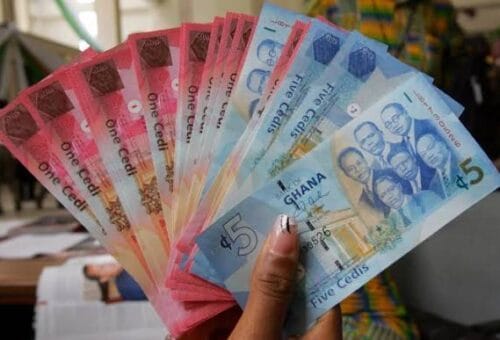
Ghanaian businesses lost an estimated GHS 500 million to cybercrime in 2025, according to the Bank of Ghana’s financial stability reports — and 2026 is shaping up to be worse. If you run a business in Accra, Kumasi, or anywhere in Ghana, this guide will show you exactly which cybersecurity Ghana 2026 threats are targeting you and the precise steps to fight back today.
Why Ghana Is Now a Prime Target for Cybercriminals
Ghana’s digital economy is booming. Mobile money transactions, e-commerce platforms, and cloud-based operations have exploded — and cybercriminals follow the money. The INTERPOL African Cyberthreat Assessment consistently flags West Africa as a rapidly growing target zone for sophisticated cyber attacks.
Small and medium-sized businesses (SMBs) are especially vulnerable because they often lack dedicated IT security teams. Understanding the threat landscape is your first line of defense.
Threat #1: AI-Powered Phishing Scams
Phishing attacks are no longer clumsy, poorly-written emails. In 2026, attackers use generative AI to craft hyper-personalized messages in perfect Twi, Ga, or English — mimicking your bank, MTN Mobile Money, or even a trusted supplier.
Ghanaian business owners have reported receiving fake GRA (Ghana Revenue Authority) tax notices and fraudulent GCB Bank alerts designed to steal login credentials.
How to Protect Your Business
- Train all staff to verify sender email addresses carefully before clicking any link.
- Implement email authentication protocols — SPF, DKIM, and DMARC — on your business domain.
- Use a business email platform with built-in phishing filters (Google Workspace or Microsoft 365).
- Never process financial requests received only via email without a secondary phone verification.
Threat #2: Ransomware Targeting SMBs
Ransomware — malware that encrypts your business data and demands payment to restore it — hit multiple Ghanaian healthcare and logistics companies in 2025. Attackers increasingly demand payment in cryptocurrency, making recovery difficult.
In practice, most SMBs that pay the ransom still don’t fully recover their data. Prevention is the only reliable strategy.
How to Protect Your Business
- Maintain automated, encrypted backups stored offline or in a separate cloud environment — tested weekly.
- Keep all operating systems, software, and antivirus tools updated with automatic patches enabled.
- Restrict employee access to only the files and systems they need (principle of least privilege).
- Consider a managed endpoint detection and response (EDR) solution like CrowdStrike or Sophos.
Threat #3: Mobile Money Fraud and SIM Swapping
With Ghana’s mobile money ecosystem processing billions of cedis monthly, SIM swap fraud has become one of the most financially devastating attacks on Ghanaian businesses and individuals. Criminals bribe or deceive telecom staff to transfer your number to a SIM they control — then drain your MoMo wallet.
This is a uniquely high-risk threat in the Ghanaian context and deserves serious attention from every business owner. You should also review your mobile money security best practices for businesses to stay protected.
How to Protect Your Business
- Register a dedicated SIM card for business mobile money — separate from your personal number.
- Enable all available PIN and biometric locks on your mobile money accounts.
- Contact your telecom provider (MTN, Telecel, AirtelTigo) and request a port-lock or SIM swap alert on your business line.
- Monitor your business MoMo account daily using transaction alerts.
Threat #4: Business Email Compromise (BEC)
Business Email Compromise is when attackers impersonate a CEO, supplier, or finance officer to trick employees into transferring funds or sharing sensitive data. The FBI’s Internet Crime Report consistently ranks BEC as one of the costliest cyber crimes globally — and Ghanaian export and import businesses are frequent targets.
A common scenario: a supplier’s email is hacked, and your accounts team receives a convincing invoice with a new bank account number.
How to Protect Your Business
- Establish a strict verbal or in-person confirmation policy for any change in payment details.
- Use multi-factor authentication (MFA) on all business email accounts — no exceptions.
- Educate your finance team specifically on BEC red flags.
Threat #5: Social Engineering and Insider Threats
Social engineering exploits human psychology rather than technical vulnerabilities. In 2026, attackers pose as IT support staff, government officials, or even job applicants to gain access to your systems or confidential information.
Insider threats — whether from disgruntled employees or compromised staff accounts — are equally dangerous and often go undetected for months. Learn more about employee cybersecurity training programs in Ghana to build your internal defense.
How to Protect Your Business
- Implement a clear visitor and contractor verification policy at your office.
- Conduct background checks for staff with access to sensitive financial or customer data.
- Use activity monitoring tools to detect unusual access patterns on your internal systems.
- Offboard employees immediately and revoke all access the moment they leave your company.
Threat #6: Unsecured Cloud and Remote Work Vulnerabilities
Post-2024, most Ghanaian businesses now use some form of cloud storage — Google Drive, Dropbox, or local alternatives. Misconfigured cloud settings and weak passwords are leaving sensitive business data publicly exposed without owners even knowing.
Remote and hybrid work has also expanded the attack surface significantly. Employees connecting via unsecured home Wi-Fi or public hotspots in Accra’s coffee shops are a serious risk.
How to Protect Your Business
- Audit your cloud storage permissions quarterly — ensure no sensitive folders are set to “anyone with the link.”
- Require employees to use a Virtual Private Network (VPN) when accessing company systems remotely.
- Enable two-factor authentication on all cloud platforms used by your business.
- Use a password manager (Bitwarden or 1Password) to enforce strong, unique passwords across your team.
Threat #7: Fake Investment and E-Commerce Scams
Ghana’s growing fintech and e-commerce sector has attracted a wave of fraudulent platforms — fake investment apps, copycat e-commerce sites, and Ponzi schemes disguised as tech startups. These scams target both consumers and legitimate businesses whose brand identity is cloned.
In 2025 and into 2026, several Ghanaian brands reported discovering counterfeit websites collecting payments from their customers. This damages your reputation and your bottom line. Check out our how to protect your brand online in Ghana guide for brand protection strategies.
How to Protect Your Business
- Register your business domain name and common variations (e.g., .com, .com.gh, .net) to prevent cloning.
- Set up Google Alerts for your business name to detect impersonation quickly.
- Display verified trust badges and SSL certificates prominently on your website.
- Report fraudulent sites to the National Communications Authority (NCA) of Ghana immediately.
Key Takeaways
- AI-powered phishing is evolving fast — staff training and email authentication are non-negotiable in 2026.
- Ransomware protection starts with regular, offline backups and updated software — not just antivirus.
- SIM swap fraud is a uniquely high risk in Ghana’s mobile money ecosystem — separate your business SIM.
- Business Email Compromise requires human verification protocols, not just technical tools.
- Social engineering and insider threats demand both policy and monitoring — technology alone won’t save you.
- Misconfigured cloud accounts and weak remote work policies are silent vulnerabilities most SMBs overlook.
- Brand cloning is rising — register your domain variants and monitor your name online proactively.
Frequently Asked Questions
What is the biggest cybersecurity threat facing Ghanaian businesses in 2026?
Based on current trends, AI-powered phishing and Business Email Compromise (BEC) are the most financially damaging threats for Ghanaian SMBs in 2026. Mobile money fraud via SIM swapping is a close second due to Ghana’s high mobile money adoption rate. All three can be significantly mitigated with staff training and multi-factor authentication.
How much does basic cybersecurity protection cost for a small business in Ghana?
Basic protection — including a business email platform with security features, a password manager, and MFA — can cost as little as GHS 300–800 per month depending on team size. Free tools like Google Workspace’s built-in security, Bitwarden’s free tier, and the NCA’s cybersecurity resources can reduce costs further. The cost of a breach almost always far exceeds the cost of prevention.
Is there a government body in Ghana that handles cybercrime complaints?
Yes. The Cyber Security Authority (CSA) of Ghana is the primary government body responsible for cybersecurity regulation and incident response. You can report cybercrime incidents through their official channels. The National Communications Authority (NCA) also handles telecom-related fraud including SIM swap cases.
Do I need a dedicated IT team to protect my small business from cyber threats?
Not necessarily. Many Ghanaian SMBs successfully manage their cybersecurity using managed security service providers (MSSPs) or cloud-based security tools that require minimal technical expertise. What matters most is having clear policies, trained staff, and automated tools — not a large in-house team. Start with the basics: MFA, backups, and staff training.
How can I tell if my business has already been compromised?
Common warning signs include unexpected account lockouts, unfamiliar login locations in your email or cloud accounts, unusual outgoing transactions, slow or crashing systems, and customer complaints about suspicious messages from your accounts. If you suspect a breach, immediately change all passwords, enable MFA, and contact a cybersecurity professional or the Cyber Security Authority of Ghana for guidance.