Mahama Government 2026: 5 Critical SME Policy Tests
Mahama government 2026: Are Ghana's SME policies delivering real relief? We score 5 critical promises on tax, finance, and infrastructure.

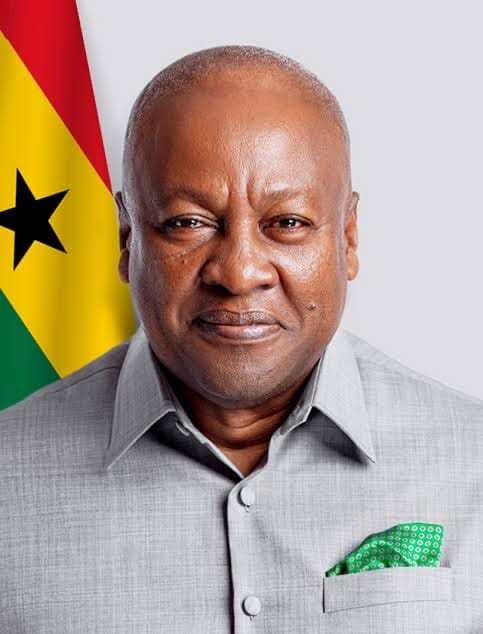
Can a government truly rebuild small business confidence in under two years? That’s the central question facing Ghana’s Mahama administration in 2026 — and for the country’s estimated 2.5 million micro, small, and medium enterprises, the answer carries real economic weight.
The Promise vs. The Reality: Setting the Stage
When President John Mahama returned to office in January 2025, his campaign platform leaned heavily on economic revival — particularly for Ghana small business policy reform, tax relief, and infrastructure investment. Twelve-plus months in, it’s fair to ask: what has actually changed on the ground?
This is an opinion piece grounded in observable policy developments and reported business conditions. The goal isn’t to score political points — it’s to give entrepreneurs and decision-makers an honest assessment of where things stand.
1. Tax Reform: Partial Progress, Persistent Gaps
One of the most anticipated moves under Ghana economic policy 2026 was the review of the controversial Electronic Levy (E-Levy) and simplification of the tax filing process for SMEs. The administration did follow through on reducing the E-Levy burden, which had been widely criticized by traders and mobile money-dependent businesses since its introduction under the previous government.
However, the broader tax compliance environment for small businesses remains complex. According to the Ghana Revenue Authority, SME tax registration and filing still involves multiple touchpoints that many micro-entrepreneurs find prohibitive. The promised single-window tax portal for small businesses has been announced but, as of mid-2026, remains in a pilot phase in select districts.
What’s Working
- E-Levy reduction has meaningfully lowered transaction costs for mobile money-reliant traders
- The VAT flat rate scheme threshold review is under active parliamentary consideration
- Some informal sector businesses report slightly improved engagement from GRA field officers
What Still Needs Work
- The digital tax portal rollout is behind schedule
- Multiple tax handles (income tax, VAT, NHIL, GETFund levy) still create compliance fatigue
- Rural and peri-urban businesses report little visible change in their tax experience
2. Business Support Initiatives: Promising Architecture, Slow Execution
The Mahama government reactivated and rebranded several SME support programs, including an expanded version of the Ghana Enterprises Agency (GEA) mandate and new credit guarantee schemes targeting women-led and youth-owned businesses. On paper, these are meaningful structural moves.
In practice, disbursement timelines and eligibility criteria have frustrated many applicants. Industry observers note that the gap between policy announcement and actual fund access remains a persistent challenge — one that predates this administration but has not yet been decisively closed under Mahama government 2026 leadership.
3. Infrastructure: The Long Game That SMEs Can’t Afford to Wait For
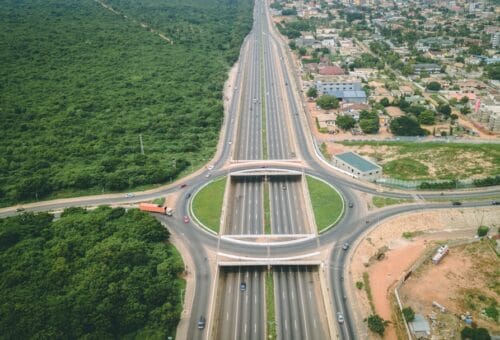
Infrastructure investment — roads, electricity reliability, digital connectivity — is perhaps the most consequential variable for Ghana entrepreneurship 2026. The government’s 24-Hour Economy policy initiative, which aims to extend productive economic activity beyond traditional hours, directly depends on stable power supply.
Electricity reliability in key commercial zones has shown modest improvement compared to the severe load-shedding crisis of 2023-2024. However, business owners in secondary cities and market towns report that power outages remain a significant operational cost. The ECOWAS Regional Energy Access initiative has provided some multilateral support, but domestic grid investment timelines remain stretched.
The 24-Hour Economy: Ambition vs. Infrastructure Reality
The 24-Hour Economy concept is genuinely innovative policy thinking — it signals a government that understands economic density and asset utilization. But for a market trader in Kumasi or a food processor in Tamale, it only works if the lights stay on and roads to market are passable.
From conversations reported in local business media, the policy is generating enthusiasm among urban entrepreneurs but skepticism in areas where baseline infrastructure is still unreliable. You can also explore [INTERNAL_LINK: Ghana infrastructure investment and SME growth] for deeper context on this dynamic.
4. Access to Finance: The Structural Problem That Policy Alone Can’t Fix
Access to affordable credit remains the single most cited barrier for Ghanaian small business owners, according to surveys conducted by the Association of Ghana Industries. Interest rates in the commercial banking sector remain elevated, reflecting both monetary policy responses to inflation and structural risk pricing for SME lending.
The Mahama administration has signaled intent to leverage the Development Bank Ghana (DBG) more aggressively as a wholesale lender to push lower-cost funds into the SME sector. Early 2026 data suggests DBG disbursements are increasing, but the transmission to end-borrowers through participating financial institutions is still inconsistent.
For a broader view of financing options available to entrepreneurs, see [INTERNAL_LINK: alternative financing options for African SMEs in 2026].
5. The Entrepreneurship Ecosystem: Genuine Momentum, Uneven Distribution
Beyond government policy, Ghana entrepreneurship 2026 is being shaped by a maturing startup ecosystem, growing fintech infrastructure, and an increasingly connected youth demographic. The government deserves partial credit for maintaining a policy environment that hasn’t actively stifled this momentum.
Accra’s tech and creative economy continues to attract regional attention. But the honest assessment is that this ecosystem energy is heavily concentrated in Greater Accra, with limited spillover to the Northern, Volta, and Western regions where many of Ghana’s most economically vulnerable small businesses operate.
What the Mahama Administration Gets Right on Ecosystem Building
- Maintained and slightly expanded the Ghana Innovation Hub network
- Sustained engagement with diaspora investment channels
- Kept regulatory dialogue open with fintech operators
Where the Ecosystem Gaps Remain
- Mentorship and business development services are still largely urban-centric
- Export facilitation for SMEs remains bureaucratically heavy
- Skills development programs need faster alignment with market demand
For entrepreneurs looking to navigate these gaps, [INTERNAL_LINK: Ghana startup ecosystem resources and funding guides] provides a practical starting point.
The Honest Scorecard: A Balanced Assessment
Is the Mahama government delivering on its economic promises to small business owners? The answer, as of mid-2026, is: partially, and unevenly. There is genuine policy intent and some structural moves that will matter over a 3-5 year horizon.
But the urgent, felt needs of most Ghanaian small business owners — lower borrowing costs, reliable power, simpler tax compliance, and faster access to support funds — are not yet being met at scale. The administration has laid some important groundwork. Execution speed and geographic equity remain the critical tests ahead.
As World Bank Ghana country data consistently shows, SME productivity gains in developing economies are most strongly correlated with infrastructure reliability and financial inclusion — both areas where Ghana still has significant runway for improvement.
Key Takeaways
- The E-Levy reduction is a tangible win for mobile money-dependent small businesses
- The digital tax portal and SME credit programs show promise but face execution delays
- Infrastructure reliability — especially power — remains the most critical unresolved constraint
- Development Bank Ghana disbursements are growing but transmission to SMEs needs acceleration
- The entrepreneurship ecosystem is growing but remains geographically concentrated in Accra
- The administration’s long-term policy architecture is sound; near-term delivery speed is the real test
Frequently Asked Questions
What specific tax changes has the Mahama government made for small businesses in 2026?
The most notable change has been the reduction of the Electronic Levy (E-Levy) rate, which directly benefits traders and entrepreneurs who rely on mobile money. The Ghana Revenue Authority is also piloting a simplified digital filing portal for SMEs, though this rollout is still in early stages as of mid-2026.
How can Ghanaian SMEs access government-backed financing in 2026?
The primary route is through Development Bank Ghana (DBG)-linked products offered by participating commercial banks. SME owners should specifically request DBG-backed loan options, which typically offer lower rates and longer repayment terms. The Ghana Enterprises Agency also administers grant and credit guarantee programs for qualifying businesses.
Is the 24-Hour Economy policy actually helping small businesses yet?
The 24-Hour Economy initiative is generating real enthusiasm among urban entrepreneurs, particularly in Accra. However, its practical impact is limited in areas with unreliable power supply and infrastructure gaps. The policy’s full potential will depend heavily on parallel progress in electricity reliability and road infrastructure.
How does Ghana’s SME policy environment compare regionally in 2026?
Ghana remains one of West Africa’s more business-friendly environments, with relatively strong rule of law and a growing fintech infrastructure. However, countries like Rwanda and Kenya continue to outperform on ease of doing business metrics, particularly in digital business registration and SME credit access, according to regional competitiveness assessments.
What should small business owners do right now to take advantage of available support?
Three immediate actions make sense: First, verify whether your district is part of the GRA digital filing pilot. Second, contact a DBG-participating bank to ask specifically about SME-linked loan products. Third, register with the Ghana Enterprises Agency if you haven’t already — even if current programs don’t fit your needs, registration positions you for future disbursements and advisory services.