Ghana’s Largest Indigenous Mining Company Just Secured $205 Million — And It Already Controls 45% of the Country’s Mining Operations
Engineers & Planners closes a landmark syndicated deal with Stanbic Bank, Standard Bank, Ecobank, and Absa — bringing its total financing from Stanbic alone to over $450 million. CEO Ibrahim Mahama says the company is just getting started.

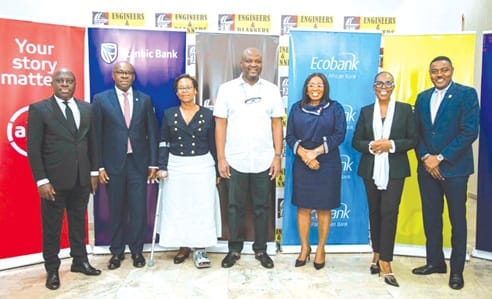
When Engineers & Planners (E&P) was founded 25 years ago, Ghana’s mining sector was dominated by foreign contractors. Today, the company founded by Ibrahim Mahama is the largest indigenous mining contractor in the country — and on February 27, 2026, it closed one of the most significant financing deals in the history of Ghanaian private enterprise: a US$205 million facility arranged by Stanbic Bank Ghana and Standard Bank of South Africa, with Ecobank Ghana and Absa Bank Ghana participating as key lending partners.
The five-year senior secured facility — structured in two tranches of $110 million and $95 million — will fund E&P’s ongoing contract mining operations, particularly its long-term engagement with Gold Fields Ghana Limited, one of West Africa’s largest gold producers. The deal takes the cumulative value of financing arranged by Stanbic Bank Ghana and Standard Bank for E&P to more than $450 million.
“Today, we can confidently say we hold about 45% of mining operations in Ghana. But we are not stopping there.” — Ibrahim Mahama, CEO, Engineers & Planners
⛏️ DEAL AT A GLANCE
| Borrower | Engineers & Planners Company Limited (E&P) |
| Total Facility | US$205 million (5-year senior secured) |
| Tranche 1 | US$110 million — senior secured term loan |
| Tranche 2 | US$95 million — revolving credit facility |
| Lead Arrangers | Stanbic Bank Ghana / Standard Bank South Africa |
| Co-Lenders | Ecobank Ghana PLC / Absa Bank Ghana Limited |
| Purpose | Contract mining operations at Gold Fields Ghana |
| E&P Market Share | ~45% of Ghana’s total mining operations |
| E&P Employees | 4,000+ |
| E&P Founded | ~1999 (25+ years of operations) |
| Total Stanbic Facilities for E&P | Over US$450 million to date |
A 25-Year Journey to the Top
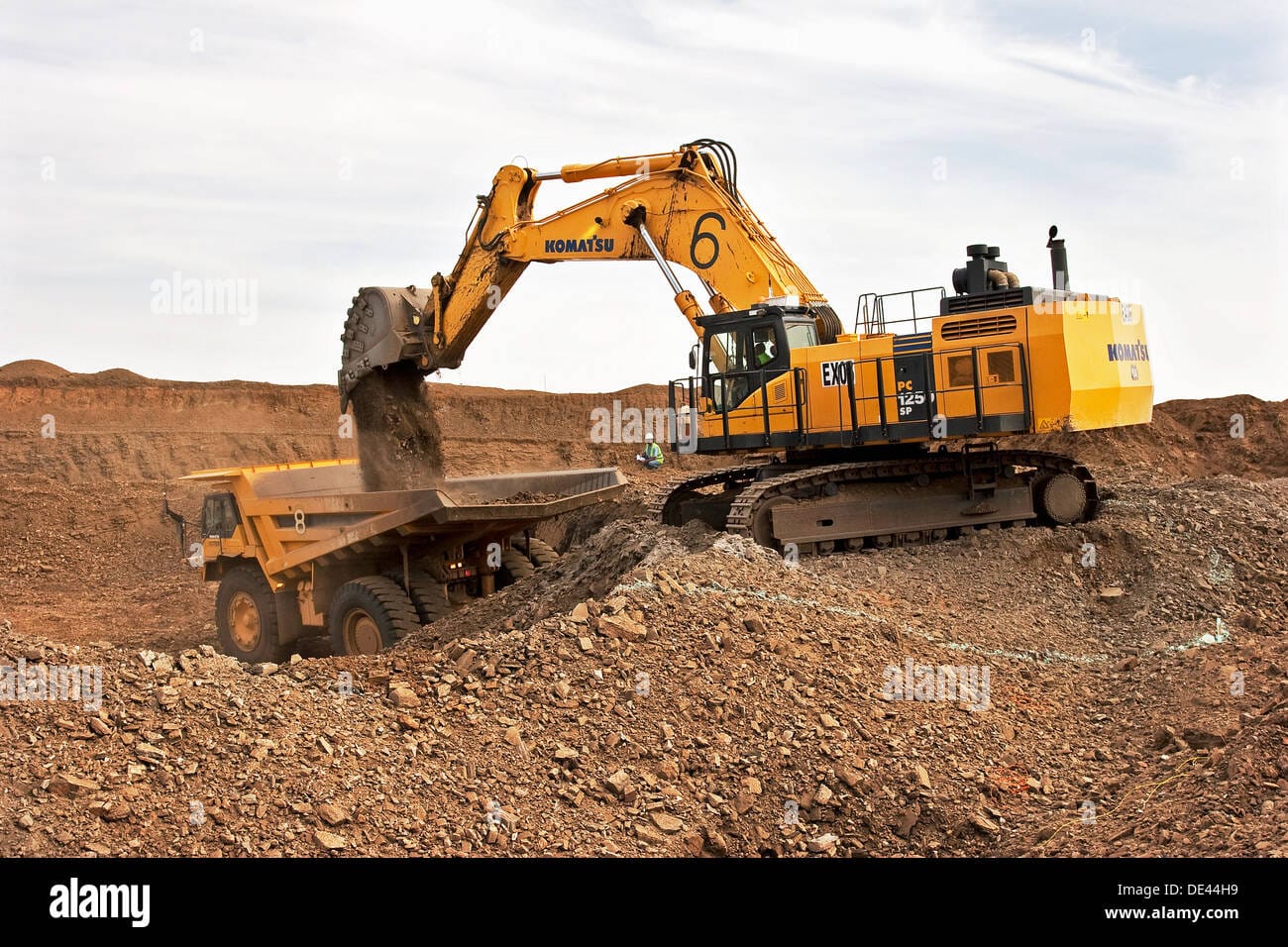
The story of Engineers & Planners is one of the most remarkable in Ghanaian business history. Founded by Ibrahim Mahama — an entrepreneur who built the company from scratch into a continental-scale operation — E&P has grown into the dominant force in Ghana’s contract mining sector, executing large-scale hard-rock mining on behalf of international gold producers including Gold Fields Ghana.
The CEO reflected on that journey at the signing ceremony, crediting a combination of resilience, strategic partnerships, and a deliberate philosophy of building local capacity. He noted that E&P had structured its financial arrangements to protect its banking partners, ensuring lenders were repaid before profits were distributed — a discipline he said had built the trust that now enables the company to raise debt at this scale.
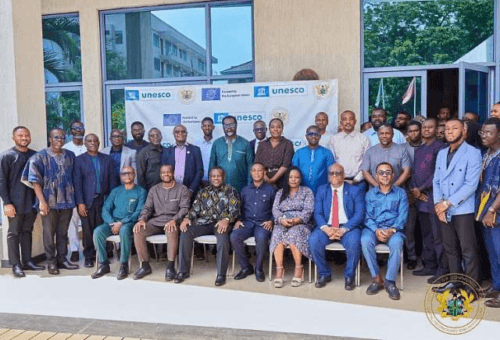
Stanbic Bank Ghana CEO Kwamina Asomaning echoed that sentiment, describing the two-decade relationship as one built on shared ambition. “Our relationship with E&P spans more than two decades, built on trust and shared ambition,” he said at the ceremony. “By structuring and mobilising the $205 million facility, we are not only enabling Engineers & Planners to scale its operations but also reinforcing Stanbic Bank’s role as a long-term partner in advancing localisation, strengthening Ghana’s mining value chain, and driving sustainable growth across the broader economy.”
What the Money Does — and Why It Matters for Ghana
The $205 million facility is not a speculative investment. It is operational capital, specifically designed to fund E&P’s existing and pipeline contract mining activities at Gold Fields Ghana — a long-term engagement that underpins a significant share of Ghana’s gold export earnings.
Beyond the direct financing, the deal’s significance extends to Ghana’s broader economic story. Contract mining by an indigenous Ghanaian company means that more of the value generated by Ghana’s gold resources stays in the country — through salaries paid to Ghanaian workers, procurement from local suppliers, and profits retained within the Ghanaian corporate ecosystem rather than repatriated to foreign headquarters.
With more than 4,000 employees, E&P is already a major employer. Stanbic noted that the facility is expected to generate wider economic benefits through “sustained employment, expanded local supply chain activity, and increased foreign exchange inflows from Ghana’s gold sector.”
Syndicated Financing — A Signal About Ghana’s Banking Sector
The structure of this deal is itself a story worth telling. Stanbic Bank Ghana and Standard Bank South Africa did not finance the $205 million alone — they brought in Ecobank Ghana and Absa Bank Ghana as co-lenders in a syndicated arrangement. This pooling of capital across multiple institutions reflects both the scale of the transaction and the growing sophistication of Ghana’s corporate banking market.
Syndicated deals of this magnitude are routine in South Africa, Nigeria, and Kenya. Their increasing appearance in Ghana signals that local and regional banks now have the confidence, balance sheet capacity, and risk appetite to back indigenous Ghanaian corporations at genuinely transformative scale. For a country that spent much of the early 2020s in debt distress, the ability to close a $205 million private sector syndication is a meaningful indicator of restored financial market confidence.
The Localisation Agenda — Timely Alignment with National Policy
The E&P deal lands at a politically resonant moment. President Mahama’s government has made economic recovery and localisation central planks of its agenda. The SONA delivered on the same day as the deal’s announcement highlighted the creation of more than one million jobs, the stabilisation of inflation, and the push to deepen indigenous participation in key economic sectors.
A domestically owned mining contractor controlling nearly half of Ghana’s mining activity, backed by a $450 million cumulative financing relationship with a local bank, is precisely the kind of story that fits that narrative. It is not a government-driven localisation initiative — it is market-driven, commercially validated, and built over 25 years of sustained performance.
Ibrahim Mahama framed it plainly at the signing: “It strengthens our capacity to deliver on large-scale mining contracts to the highest global standards, while deepening local participation in the sector. We are grateful to Stanbic Bank, Standard Bank, and our lending partners for their confidence in our vision and for supporting indigenous excellence.”
What Comes Next — Ambitions Beyond 45%
The CEO’s declaration that E&P is “not stopping” at 45% market share points to further consolidation and expansion. The $95 million revolving credit tranche in the new facility provides the flexibility to pursue additional contracts and operational opportunities as they arise, without needing to return to the market for fresh financing each time.
For Ghana’s mining sector — which is simultaneously grappling with the legacy of illegal mining (galamsey), pressure to retain more value from gold exports, and an improving macroeconomic environment — the rise of E&P as a dominant indigenous force represents both an economic success story and a template for what Ghanaian enterprise can achieve when it is given the capital, patience, and institutional support to compete.