Ghana’s Black Stars Get $13.7 Million for 2026 World Cup — Full Budget, the Fearsome Group L Draw, and Everything You Need to Know
Sports Minister Kofi Adams reveals a line-by-line spending plan covering everything from friendly matches to a hypothetical World Cup final — as Otto Addo's squad prepares to take on England, Croatia and Panama on football's biggest stage.

The Black Stars are going to the World Cup — and Ghana is going all in. Sports and Recreation Minister Kofi Adams appeared before Parliament’s Select Committee on Sports on Thursday, February 26, to lay out a comprehensive $13,776,965 budget for Ghana’s fifth appearance at the FIFA World Cup, set to kick off in June across the United States, Canada, and Mexico.
The figure — equivalent to GH¢146,268,659.80 — covers every aspect of Ghana’s campaign, from pre-tournament training camps and friendly matches to potential progression all the way to a World Cup final. It is a statement of ambition from a government that inherited an economy in crisis but is betting, among other things, on football to lift the national spirit.
“The total budget requested from the Ghana Football Association for the Black Stars’ participation in the 2026 World Cup came to $13,776,965.” — Sports Minister Kofi Adams
⚽ OFFICIAL 2026 WORLD CUP BUDGET BREAKDOWN
Stage Estimated Cost (USD)
| Pre-tournament camping & 4 friendlies | $1,230,465 |
| Group Stage (3 matches) | $6,284,000 |
| Round of 32 | $690,000 |
| Round of 16 | $920,000 |
| Quarter-final | $1,137,500 |
| Semi-final | $1,365,000 |
| Final | $1,840,000 |
| Management Committee honorarium | $310,000 |
| TOTAL | $13,776,965 |
Source: Ghana Ministry of Sports & Recreation / Parliament Select Committee on Sports, February 26, 2026
How the Money Breaks Down
The bulk of the spending — $6,284,000 — is earmarked for the group stage alone, covering three matches against Panama, England, and Croatia. This includes player bonuses, technical staff costs, accommodation, travel within North America, and operational logistics for a tournament spread across three countries.
Pre-tournament preparation accounts for $1,230,465, funding a FIFA-approved training camp and four international friendly matches. Ghana has already confirmed games against Austria on March 27 and Germany on March 30 in Stuttgart — a challenging test against the four-time World Cup champions that will sharpen the team ahead of the tournament. Wales has also been mentioned as a potential opponent for another preparatory fixture.
The remaining budget allocations assume Ghana advance through every round — a full progression scenario designed for planning purposes. If the Black Stars fall in the group stage, the deeper knockout budgets simply go unspent. But the fact that Sports Minister Adams planned all the way to a hypothetical final at $1.84 million signals that no one in the Ghana camp is thinking small.
Separately, the Black Stars Management Committee — reconstituted under the chairmanship of Dr Randy Abbey following Ghana’s failure to qualify for AFCON 2025 — is allocated $310,000 in combined honoraria for the tournament. Former Black Stars captain Stephen Appiah serves as Vice Chairman for Player Relations, with Moses Armah, Samuel Aboabire, and Dr Richard Nsenkyire completing the five-member body.
Group L: The Hardest Draw in Africa?
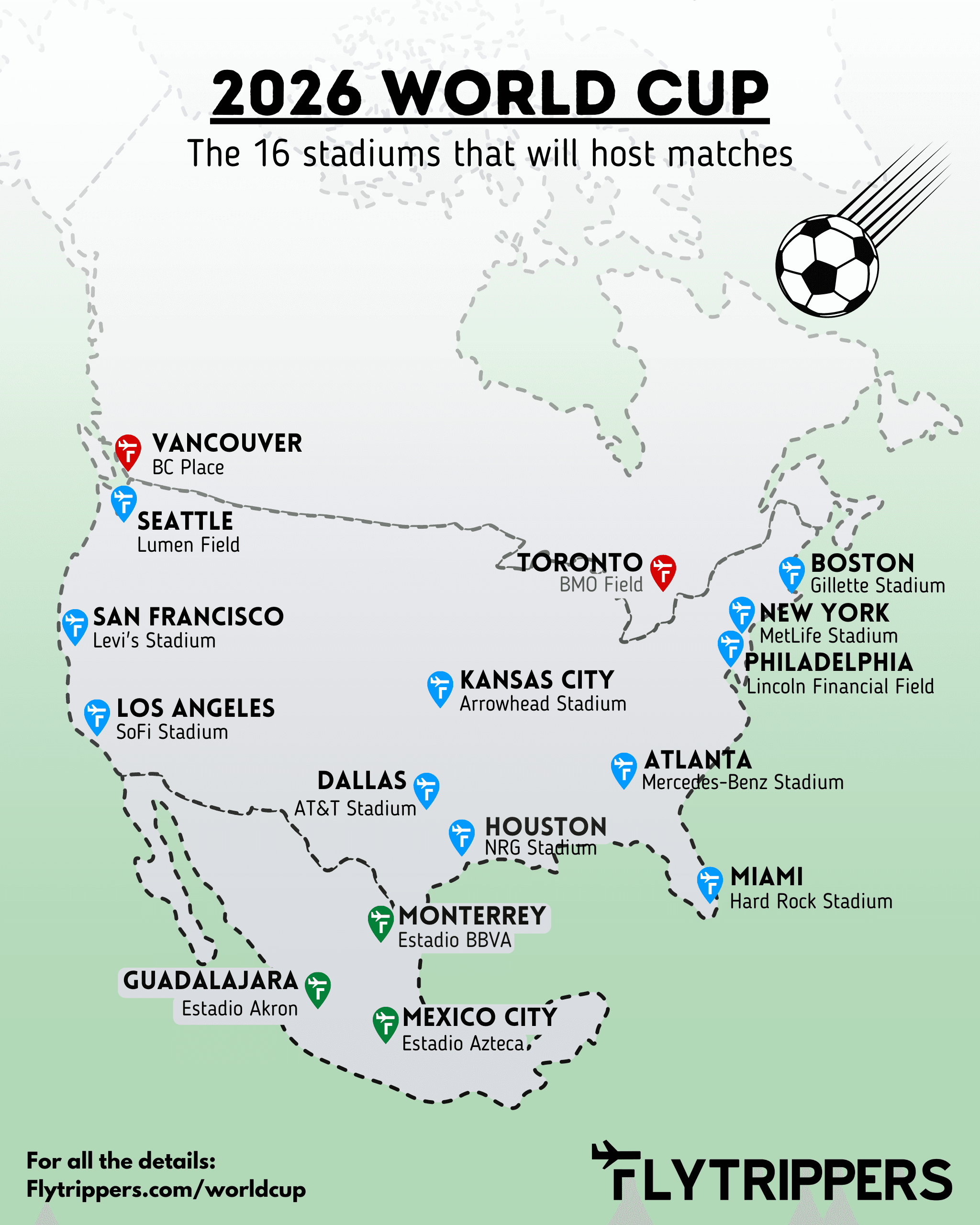
Ghana’s Group L draw is unforgiving. The Black Stars must navigate three of the most storied football nations on the planet: England, Croatia, and Panama — with their opener set for June 17 against Panama in Toronto, Canada.
England, hosting a squad packed with Premier League stars and buoyed by recent tournament performances, will be among the tournament favourites. Croatia — 2018 World Cup finalists and consistent European overachievers — offer a very different tactical challenge. Panama, while the softer option on paper, has developed considerably since their 2018 debut and cannot be taken lightly.
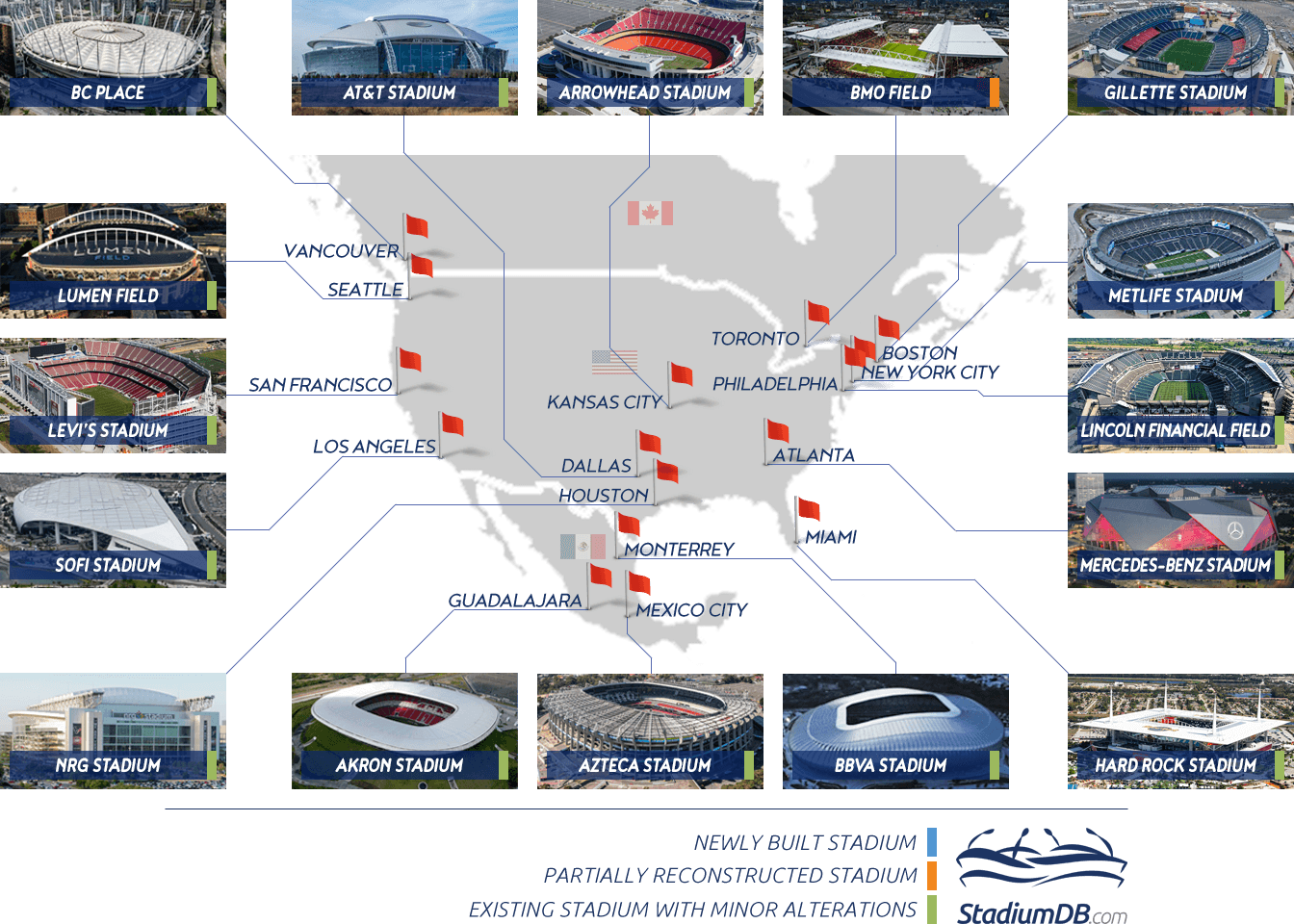
Ghana’s schedule after Panama: a June 23 fixture against England at Gillette Stadium in Foxborough (Boston), followed by the group decider against Croatia on June 27 at Lincoln Financial Field in Philadelphia. The base camp has been confirmed as Bryant University in the United States, giving the squad a stable and familiar environment throughout the competition.
The Squad: Stars, Leaders, and Those Fighting for a Spot
Otto Addo — who made history by becoming the first coach to lead Ghana to two World Cup tournaments — has assembled a squad blending elite European pedigree with hard-won experience. The final 26-man roster will be submitted to FIFA by April 11, with the official announcement confirmed for June 1.
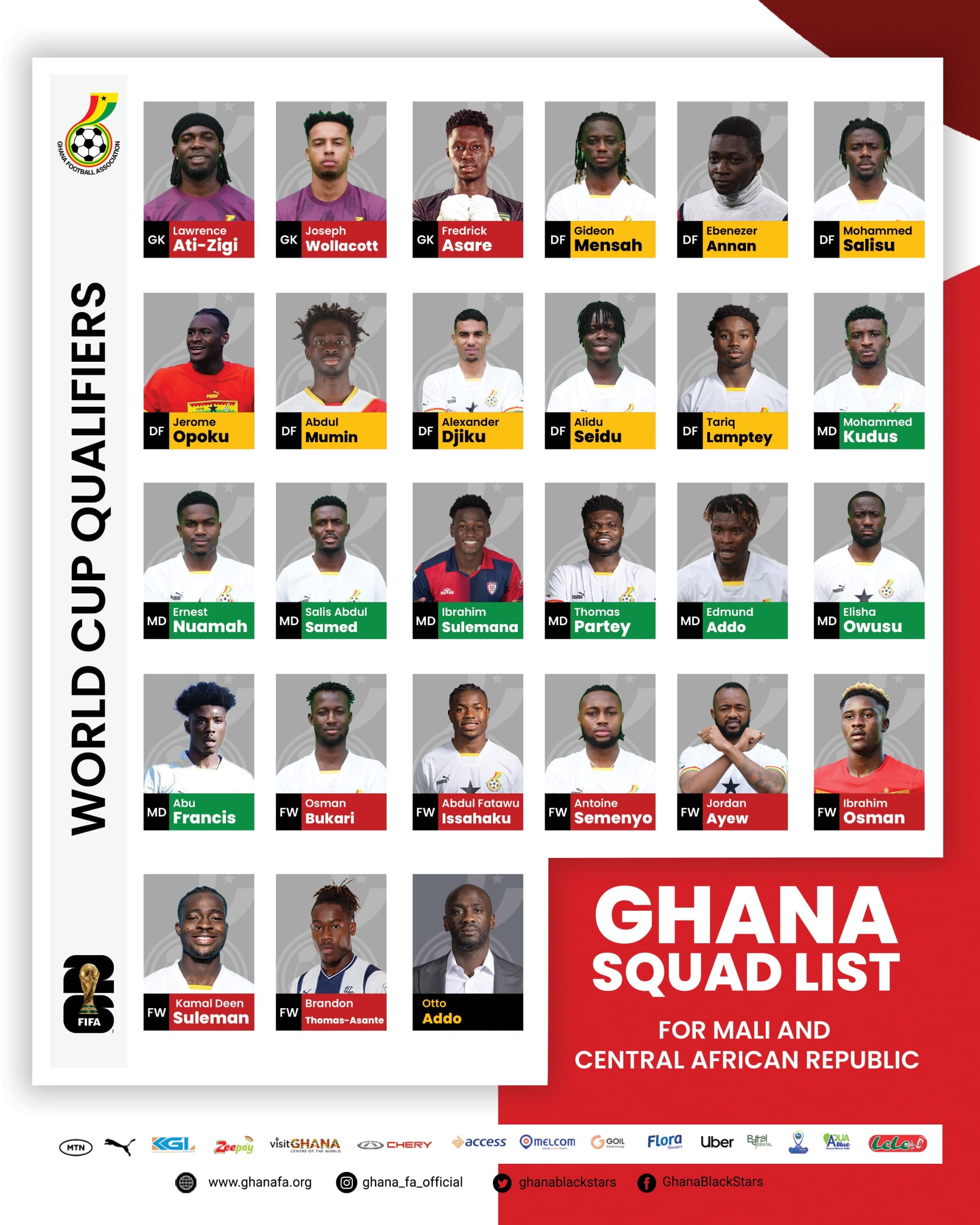
At the heart of the team is Mohammed Kudus, who has elevated himself into one of Europe’s most electric attacking midfielders. Captain Jordan Ayew, at 34, will be heading to his third World Cup — a historic achievement for the veteran forward who has been a model of consistency for the Black Stars through qualification. Antoine Semenyo’s pace and directness, Thomas Partey’s ability to control tempo, and Inaki Williams’ tireless pressing make Ghana’s attack a genuinely dangerous unit.
In goal, Hearts of Oak’s Benjamin Asare — who kept five clean sheets in six World Cup qualifying matches — has established himself as the undisputed number one, with Lawrence Ati-Zigi offering experienced backup.
The technical staff has also been substantially strengthened. French tactician Alain Ravera joins as Assistant Coach, bringing experience from Guinea and AS Monaco. Belgian psychologist Kris Perquy handles mental performance preparation — an increasingly critical element of tournament football. Video analyst Gregory De Grauwe, Technical Advisor Winfried Schäfer, and Performance Coach Dwayne Peasah Paa Kwesi complete a backroom team built specifically for a deep World Cup run.
Lessons from the Past — and the Pressure of 2010
The 2010 World Cup in South Africa remains Ghana’s defining football moment — the quarter-final run, the drama against Uruguay, the heartbreak of Luis Suarez’s infamous handball and the missed penalty by Asamoah Gyan. It is a memory that haunts and motivates in equal measure. Sixteen years on, a generation of Ghanaian fans — many of them now in the diaspora across the US, UK, and Canada — are daring to dream again.
Ghana’s recent qualifying campaign has been impressive. They topped their African qualifying group with 15 points from five wins, demonstrating the kind of consistency that gives genuine reason for optimism. Unlike Brazil 2014 or Qatar 2022, this squad heads into a World Cup with a settled coach, a strong management structure, and a financially backed plan.
The $13.7 million budget is the foundation. The rest is up to the players — and the nation watching from every corner of the world.