Mahama’s 2026 SONA: ‘Ghana Is Back’ — Inflation Crashes to 3.8%, Over 1 Million Jobs Created and GDP Hits $113 Billion
President John Dramani Mahama delivers a landmark State of the Nation Address to Parliament, citing sweeping economic gains — but opposition benches remain unconvinced.

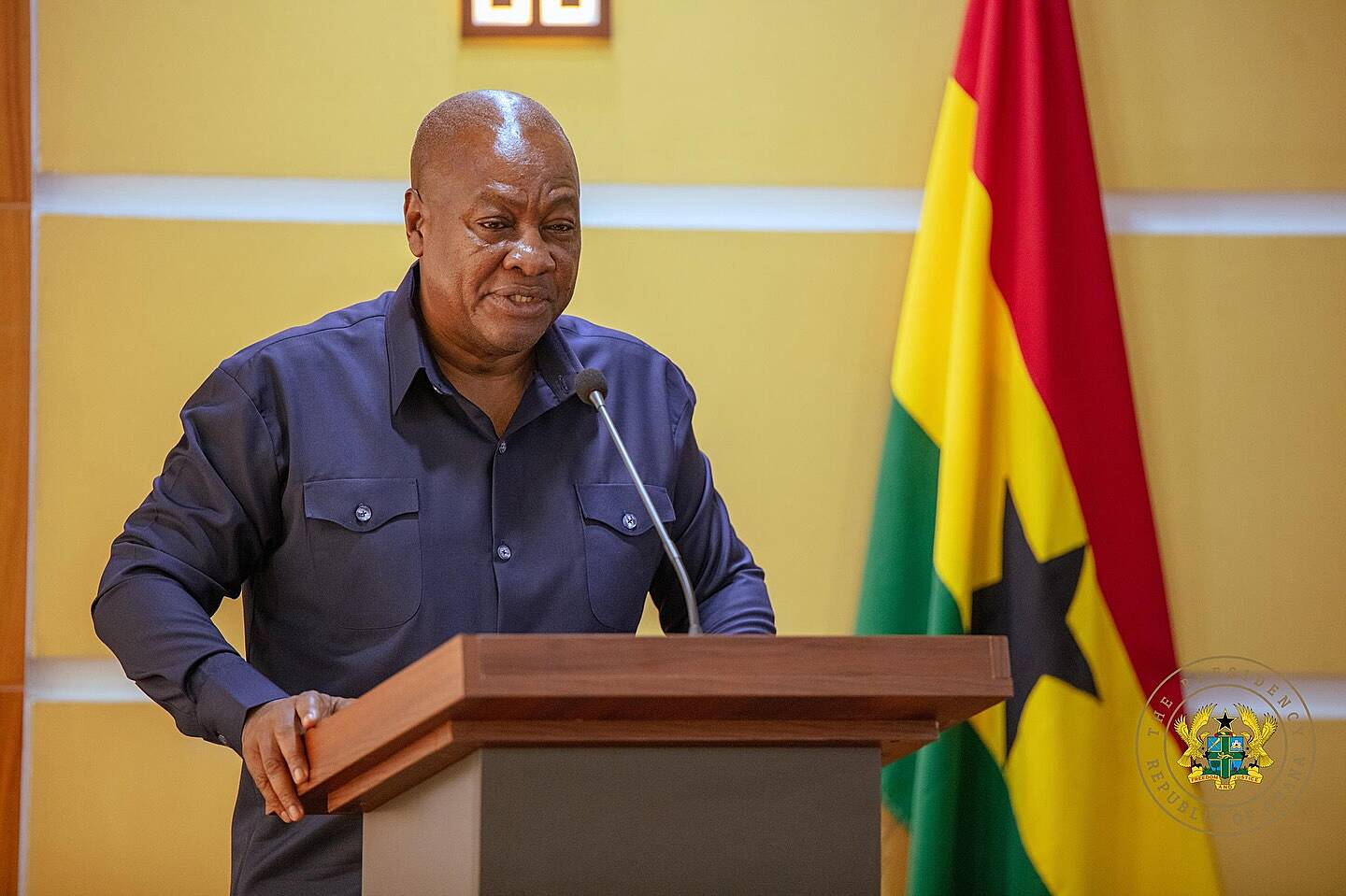
President John Dramani Mahama stood before Parliament on Friday, February 27, 2026, and delivered what may be one of the most consequential State of the Nation Addresses (SONA) in recent Ghanaian history — declaring with confidence that the country’s long-running economic crisis has been turned around. In a speech that combined hard data, political candour, and a rallying call to Ghanaians at home and in the diaspora, Mahama declared that his administration’s ‘Resetting Ghana’ agenda is delivering measurable results.
“I promised then that just as I have confronted and overcome crises in the past, I will reset our economy and return us to a path of growth, progress and development. Today, Mr Speaker, I can say to you with confidence — Ghana is back. Ghana is working again and Ghana is open for business,” the President told lawmakers.
“Our nation is on the runway, in take-off mode, and you are all advised to fasten your seat belts. The hope is real.” — President John Dramani Mahama, SONA 2026
Ghana’s Inflation Falls to 3.8% — A Dramatic Reversal
Perhaps the most striking figure in the 2026 SONA was Ghana’s inflation rate. At its peak in late 2022, inflation had soared to a devastating 54.1%. By December 2024, it had declined to 23.5%. As of January 2026, the figure stands at just 3.8% — representing 13 consecutive months of decline, and one of the most dramatic disinflation episodes anywhere in Africa.
Food inflation — which hit ordinary Ghanaians the hardest — has fallen by 26.6 percentage points. Meanwhile, inflation for locally produced goods dropped by 22.6 percentage points. For Ghanaian families in Accra, Kumasi, Tamale, and across the country, these are figures they can feel at the market.
Fuel prices, a key driver of the cost of living and transportation costs, have also come down sharply. Petrol fell from GH¢15.2 per litre to GH¢9.97, while diesel dropped from GH¢15.4 to GH¢11.30.
GDP Jumps to $113 Billion — Ghana Climbs Into Africa’s Top 10 Economies
Mahama told Parliament that Ghana’s Gross Domestic Product (GDP) is projected to reach $113 billion in 2025, a significant increase from $83 billion at the end of 2024. This leap places Ghana firmly among Africa’s top 10 largest economies — a point the President cited as evidence that his administration’s economic policies are working.
Average GDP growth came in at 6.1% in the first three quarters of 2025. The fiscal deficit was reduced to 3.1%, and public debt was cut by GH¢82.1 billion, bringing the debt-to-GDP ratio from 61.8% down to 45.3%. On January 2, 2026, Ghana settled a $709 million Eurobond ahead of schedule — completing the full $1.4 billion debt service allocated for 2025.
The positive signals have been noted internationally. Credit rating agencies Fitch Ratings, Moody’s Investors Service, and S&P Global Ratings all subsequently upgraded Ghana’s sovereign credit ratings — a development that could unlock more competitive borrowing and foreign investment in the coming year.
Over 1 Million Ghanaians Employed — Nearly 1 Million Lifted from Poverty
Citing data from the Ghana Statistical Service, President Mahama announced that more than one million Ghanaians secured employment between the first and third quarters of 2025. Simultaneously, approximately 950,000 Ghanaians moved out of multidimensional poverty during the same period.
“This improvement indicates that our economy is gaining strength and resilience on the global stage. We are moving decisively from planning to action on our flagship 24-hour economy,” Mahama said.
The government’s abolition of several levies — including the e-levy, betting tax, emission tax, and COVID-19 levy — returned approximately GH¢6 billion directly into the pockets of Ghanaians. Interest rates have dropped from above 30% to a range of 18 to 20%, easing access to credit for both businesses and households.
‘We Strengthened the Cedi’ — Exchange Rate Stability Returns
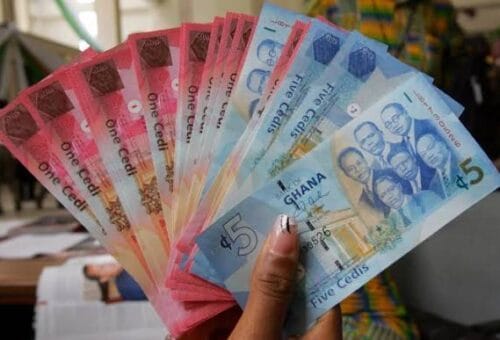
On the currency front, Mahama stated that the administration’s approach was not to artificially ‘arrest’ the dollar, but to strengthen the cedi through sound monetary management and fiscal discipline. The cedi, which had experienced dramatic depreciation in recent years, has shown notable stabilisation under current macroeconomic conditions.
“We didn’t arrest the dollar; we strengthened the cedi,” Mahama told Parliament — a line that drew applause from the majority side and is likely to become one of the more memorable phrases from the address.
Opposition Mounts Dramatic Protest — Minority Not Convinced
Not everyone in Parliament shared the President’s optimism. In what observers described as a dramatic moment, members of the Minority — the New Patriotic Party (NPP) — staged a visible protest during the address. The opposition has consistently challenged the government’s economic narrative, arguing that the gains cited by the President have not translated into tangible relief for the majority of Ghanaians.
Critics, including members of civil society, have also noted that while macroeconomic indicators have improved, many Ghanaians continue to struggle with high unemployment among youth, erratic public services, and unresolved structural challenges in healthcare and education. These issues are expected to shape political discourse as Ghana looks ahead to 2028.
Ghana as a Continental Catalyst — Mahama’s African Vision
Beyond domestic issues, President Mahama used the platform to position Ghana as a leader in Africa’s broader economic self-determination. He called for a national ‘reset’ centred on self-reliance, continental integration, and strategic leadership — framing Ghana’s recovery not merely as a domestic success story but as a model for the African continent.
“This national reset forms part of a broader continental agenda,” the President said, positioning Ghana’s economic governance as a blueprint for other African nations navigating similar pressures of debt, inflation, and development financing.
What This Means for Ghanaians in the Diaspora
For the estimated three million Ghanaians living abroad — in the United Kingdom, the United States, Canada, Germany, and beyond — the SONA carries both hope and scrutiny. Improved credit ratings and economic stability could strengthen the cedi further, making remittances more valuable when received at home. Reduced inflation means family members back in Ghana face less pressure on basic goods.
However, diaspora Ghanaians also watching the DVLA’s controversial plan to deploy staff abroad for driver’s licence services, rising tensions in Parliament, and ongoing concerns about governance and accountability will want to see the headline economic figures matched by improvements in daily life, institutions, and transparency.
Looking Ahead
The 2026 State of the Nation Address marks a pivotal moment in the Mahama administration’s second term. The numbers are real, the upgrades are verified, and the trajectory — at least on paper — points upward. The harder question, as always in Ghana’s political economy, is whether these macroeconomic gains will reach the classroom in Bolgatanga, the fishing harbour in Senya Bereku, and the market stall in Makola.
Ghana is watching. And so is the world.