Mahama Pledges GH₲40 Million for Ghana’s Creative Industry — GH₲20m for Film, New Convention Centre and a Presidential Brand Ambassador
President Mahama used his 2026 State of the Nation Address to deliver the biggest government commitment to Ghana's creative economy in years. A GH¢40 million package splits GH¢20 million for the film sector — covering Kumawood, Ghallywood and beyond — and a further GH¢20 million for music, fashion and the arts. He also pledged to personally serve as brand ambassador for the industry.

The Announcement: GH¢40 Million in Two Tranches
Delivering his 2026 State of the Nation Address to Parliament on February 27, President John Dramani Mahama made one of the most consequential announcements for Ghana’s cultural economy in recent memory. The government has allocated a combined GH¢40 million to the creative sector in the 2026 national budget — split equally between two institutions. The National Film Authority (NFA) receives GH¢20 million earmarked specifically for the film sector, and the Creative Arts Agency (CAA) receives a parallel GH¢20 million for the wider creative economy.
“The government has allocated 20 million Ghana cedis to the film sector alone. This is going to the film sector to support Kumawood and Gallywood and all the woods,” the President told lawmakers. “Mr. Speaker, another 20 million has been given for the other creative sectors. I believe that this fair injection of money will boost our creative sectors significantly.” The announcement was met with jubilation from entertainment stakeholders who have long complained that government rhetoric around creative industries has rarely translated into meaningful funding.
“Our economy will not be built only by traditional sectors, but also by human creativity — sectors that will absorb those displaced by the new AI technologies being rolled out.” — President John Mahama, SONA 2026, February 27, 2026
Why Mahama Framed Creativity as an Economic Pillar
The funding announcement came wrapped in a striking economic argument. Mahama positioned the creative economy not as a cultural add-on, but as a strategic response to the automation and artificial intelligence revolution sweeping through global industries. As AI displaces workers in manufacturing, logistics, and services, the President argued, human creativity becomes the irreplaceable economic sector. “Human creativity sectors will absorb those people who will be displaced from the shop floor by the new AI technologies that are being rolled out,” he said.
This framing reflects a broader government philosophy: that Ghana’s informal creative ecosystem — which already accounts for approximately 2.5% of GDP according to the Ministry of Tourism and Creative Arts — can become a formal, funded, and internationally competitive industry. Major concerts such as ShattaFest 2025 and Stonebwoy’s sold-out BhimFest 2025 at the 40,000-capacity Accra Sports Stadium generated tens of millions of cedis in economic activity in a single day, demonstrating the sector’s commercial potential at scale.
New Convention Centre, Refurbished AICC and National Theatre
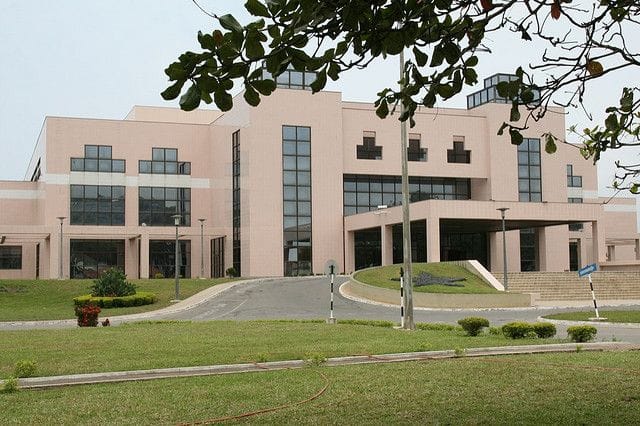
Beyond direct funding, Mahama unveiled an ambitious infrastructure agenda to underpin the creative economy. The Accra International Conference Centre (AICC) will be refurbished “to restore it to its iconic past,” with procurement and integrity assessments already underway ahead of renovation work. The State Banquet Hall, closed for several years, will also be renovated. Most significantly, the President confirmed that work will commence this year on a brand new convention and creative events centre — to be developed through a public-private partnership.
“The AICC is not enough for a country seeking to make its creative sector West Africa’s destination for meetings, conferences, musical concerts, and entertainment,” Mahama said. “Work will also commence this year on a befitting convention and creative events centre.” The National Theatre of Ghana, a landmark that has fallen into disrepair, is also scheduled for renovation within weeks. Taken together, this infrastructure package represents the most comprehensive investment in Ghana’s cultural venues in a generation.
A Presidential Brand Ambassador
In a gesture that caught many observers off guard, Mahama closed his creative economy segment by making a personal pledge: “I wish to assure the creative industry and the Ministry of Tourism that I will be your personal ambassador for the promotion of tourism and the creative sector.” It was a statement of direct, visible presidential backing — the kind that artists and filmmakers have long sought but rarely received.
The Deputy Chief of Staff, Nana Oye Bampoe Addo, had earlier articulated the government’s broader vision at MUSIGA’s 50th Anniversary Soiree: that Ghana must embrace AI, virtual reality, digital distribution, and global streaming platforms to take Ghanaian talent to the world. “This is the time for Ghana to take its rightful place on the global creative stage. This is the time to turn talent into global trade and passion into prosperity,” she said, reflecting the administration’s ambition.
What the Industry Has Been Waiting For
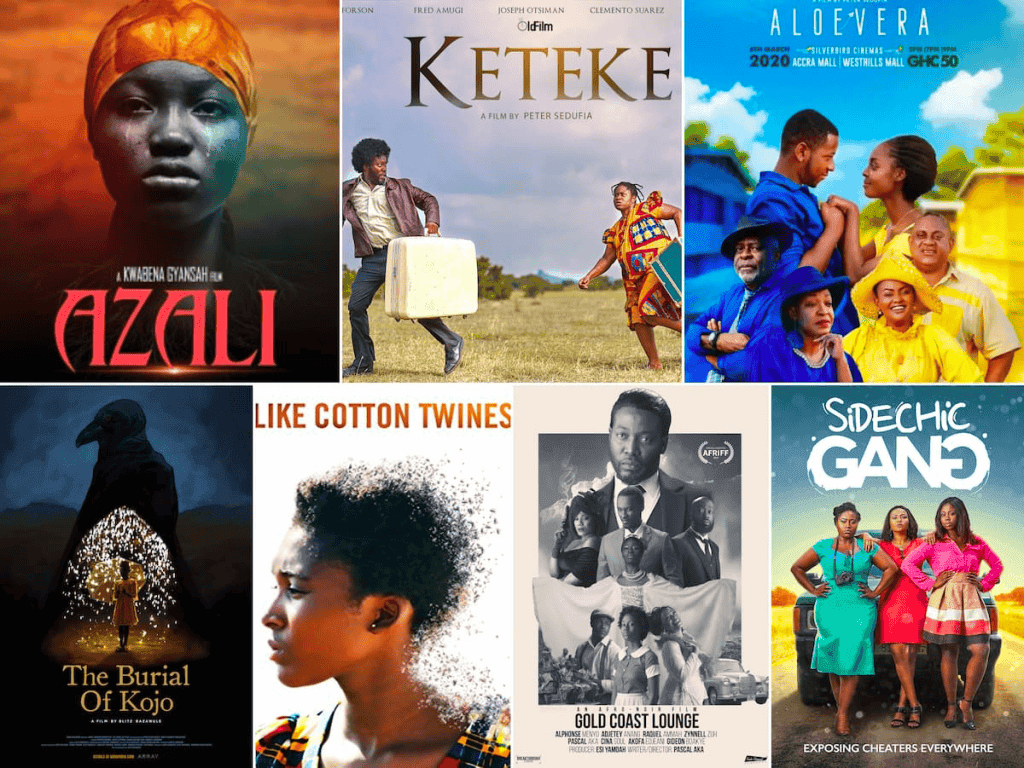
Ghana’s film sector — divided loosely between the English-language Ghallywood productions and the Twi-language Kumawood films that dominate television and mobile screens across the country — has struggled for years with inadequate distribution infrastructure, limited access to professional equipment, and no reliable government funding mechanism. The GH¢20 million NFA allocation, if deployed through transparent and meritocratic channels, could fund dozens of professional productions, support film training programmes, and help build distribution partnerships with streaming platforms.
Industry voices had cautiously welcomed the announcement, noting that the devil will be in the implementation. The challenge for the NFA and CAA will be designing disbursement frameworks that reach working filmmakers and musicians rather than being captured by industry gatekeepers. A digital music streaming revenue stream is also growing: Statista projects Ghana’s digital music market to generate US$4.36 million in 2025, a figure that will grow substantially if streaming platforms expand their presence in West Africa.
The announcement landed at a moment of real momentum for Ghanaian creative output. Afrobeats and Afropop artists are commanding global streaming numbers; Ghanaian fashion designers are appearing on international runways; and a new generation of digital content creators — YouTubers, TikTokers, podcasters — is building audiences that span Africa, Europe, and North America without ever setting foot in a traditional media studio. President Mahama’s pledge was a signal that the government sees what the market is already showing: Ghana’s creative economy has outgrown its infrastructure, and it is past time to catch up.