Ghana Gold Royalty Reduction: 5 Critical Facts 2026
Ghana gold royalty reduction is under foreign pressure in 2026. Discover what the data really says before Ghana gives up critical mining revenue.

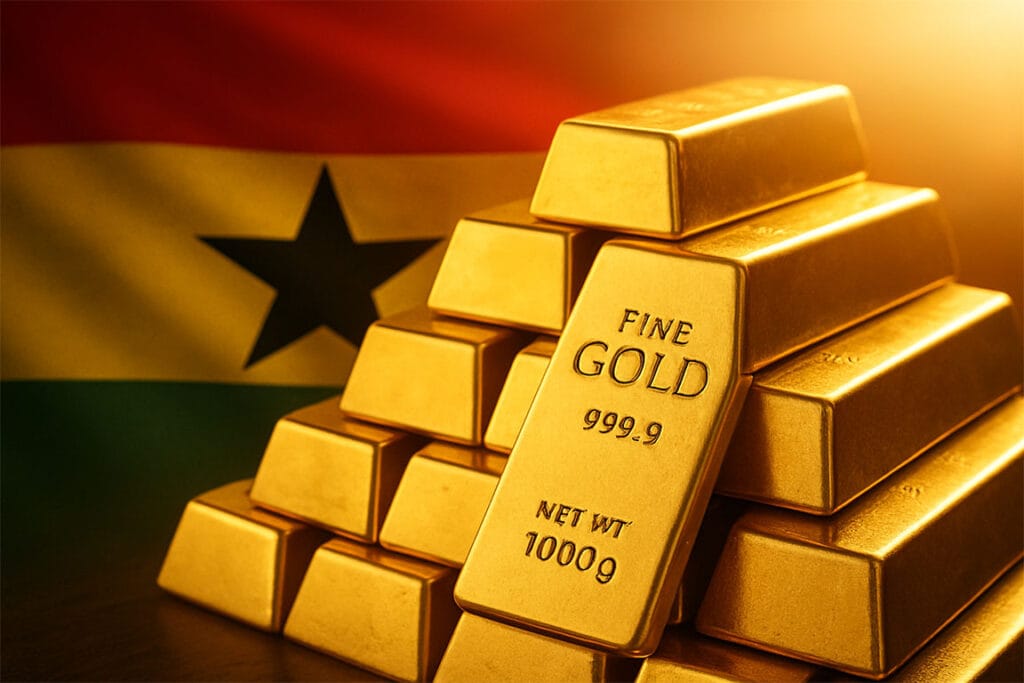
Ghana gold royalty reduction is one of the most fiercely debated economic policy questions in West Africa right now — and foreign pressure to lower rates is intensifying. Should Ghana comply, or does the data tell a different story?
The Pressure Is Real: Who Is Pushing Ghana to Cut Gold Royalties?
In 2026, Ghana faces mounting pressure from a coalition of international mining investors, multilateral financial institutions, and foreign governments — particularly those with significant mining interests in the country — to reduce its gold royalty rates.
Currently, Ghana’s Minerals and Mining Act mandates a royalty rate between 3% and 6% of the total revenue earned from mineral operations, with gold royalties sitting at the upper end. Industry lobby groups, including representatives from Canadian, Australian, and Chinese mining conglomerates, argue this rate is “uncompetitive” compared to peer nations.
Foreign governments have reportedly tied elements of bilateral trade discussions and investment facilitation agreements to royalty reform conversations. This is not unique to Ghana — similar pressure has been applied to Zambia over copper and Tanzania over tanzanite in recent years.
What the Data Actually Says About Ghana’s Mining Revenue in 2026
Ghana’s Gold Output and Revenue Contribution
Ghana remains one of Africa’s top gold producers, consistently ranking among the continent’s top three alongside South Africa and Mali. According to the Ghana Chamber of Mines, gold accounts for over 90% of the country’s total mineral export revenues.
Mining contributes roughly 6–8% of Ghana’s GDP annually, and royalties form a critical portion of domestic revenue mobilization. Cutting royalties — even marginally — would directly reduce funds available for public infrastructure, education, and healthcare.
Comparing Ghana’s Royalty Rates to Global Peers
The argument that Ghana is “uncompetitive” deserves scrutiny. Here is how Ghana’s royalty rates compare to other major gold-producing nations:
- Ghana: 3–6% of gross revenue
- South Africa: 0.5–7% (sliding scale based on profitability)
- Tanzania: 6% of gross value
- Mali: 3–6% depending on production volume
- Australia: Royalties vary by state, averaging 2.5–5%
Ghana’s rates are broadly in line with regional and global norms. The “uncompetitive” narrative, in practice, often serves investor interests more than it reflects economic reality.
The Case FOR Reducing Gold Royalties: Investor Arguments
Proponents of royalty reduction — largely foreign mining companies and some international financial advisors — make several arguments worth examining honestly.
- Lower royalties attract more Foreign Direct Investment (FDI), potentially expanding the tax base over time.
- Higher margins for miners could incentivize exploration of deeper, more expensive deposits that are currently unviable.
- Competitive rates reduce incentives for transfer pricing and underreporting of production volumes.
These are not frivolous arguments. The logic of “grow the pie” has merit in theory. However, the evidence from comparable African nations suggests the benefits rarely trickle down to host communities at the rate promised.
The Case AGAINST Reducing Gold Royalties: What Local Economists Say
Revenue Loss Would Be Immediate; Benefits Are Speculative
Local economists and civil society organizations consistently highlight a critical asymmetry: revenue loss from royalty cuts is immediate and quantifiable, while promised investment increases are speculative and delayed.
Ghana’s fiscal position in 2026 — still navigating post-debt restructuring recovery — cannot afford to gamble on speculative FDI inflows. The government needs reliable, predictable revenue streams now.
Community Impact Is Disproportionate
For everyday Ghanaians living near mining zones in the Western Region, Ashanti, and Upper West, royalty revenues fund local development projects through the Mineral Development Fund (MDF). Reducing royalties directly reduces MDF allocations to affected communities.
Mothers in these communities, small business owners supplying mining operations, and civil workers in district assemblies all feel the downstream effects of royalty policy decisions. This is not an abstract macroeconomic debate — it is a livelihood issue. You should also understand how Ghana Mineral Development Fund allocation and community benefits works to see the full picture.
The Sovereignty Argument
Lawyers and constitutional scholars in Ghana point to a fundamental principle: mineral resources belong to the state on behalf of the people, as enshrined in Ghana’s 1992 Constitution. Bowing to foreign pressure to reduce royalties sets a dangerous precedent of external actors shaping domestic resource policy.
This is particularly sensitive given Africa’s colonial history of resource extraction without equitable compensation. Many legal experts argue that Ghana should be moving toward increasing value capture — not reducing it — especially as global gold prices remain historically elevated.
What Should Ghana Actually Do? A Data-Driven Opinion
The data does not support a blanket reduction in gold royalties. However, Ghana can take nuanced steps that address legitimate investor concerns without surrendering sovereign revenue. Learn more about Ghana economic policy reforms and resource management strategies for broader context.
- Implement a transparent sliding-scale royalty system tied to international gold price benchmarks.
- Strengthen the Minerals Commission’s enforcement capacity to reduce underreporting and transfer pricing abuses — this recovers more revenue without cutting rates.
- Negotiate better stability agreements that guarantee minimum investment thresholds in exchange for rate certainty — not rate reductions.
- Engage the Africa Mining Vision framework to build a pan-African coalition against race-to-the-bottom royalty competition.
- Increase local content requirements to ensure more mining value stays in Ghana regardless of royalty structure.
For small business owners supplying the mining sector, for students studying economics and law, and for civil workers administering mining district budgets — the royalty rate is not just a number. It is the foundation of community development funding. Read about local content policy in Ghana’s mining sector to understand how these policies connect.
According to the International Monetary Fund’s Natural Resource Management guidelines, resource-rich developing nations should prioritize maximizing long-term revenue capture over short-term FDI attraction — particularly when commodity prices are high.
Key Takeaways
- Ghana’s current gold royalty rate of 3–6% is broadly in line with global and African peers — the “uncompetitive” narrative is largely investor-driven.
- Foreign pressure to reduce royalties comes from mining conglomerates and some bilateral trade partners, not from neutral economic analysis.
- Revenue loss from royalty cuts is immediate; promised FDI benefits are speculative and historically slow to materialize in African mining contexts.
- Local communities, small businesses, and civil workers bear the direct cost of reduced royalty revenues through cuts to the Mineral Development Fund.
- A sliding-scale royalty model and stronger enforcement — not rate cuts — is the data-supported path forward for Ghana in 2026.
- Ghana’s Constitution affirms mineral resources belong to the people; external pressure to reshape this policy raises serious sovereignty concerns.
Conclusion
The data in 2026 does not support Ghana reducing its gold royalties under foreign pressure. The smarter move is to modernize the royalty structure, close enforcement gaps, and build African solidarity around fair resource pricing. Ghana’s gold belongs to its people — and the revenue it generates should reflect that reality.
Frequently Asked Questions
What is Ghana’s current gold royalty rate in 2026?
Ghana’s Minerals and Mining Act sets royalty rates between 3% and 6% of gross revenue from mineral operations. Gold royalties typically sit at the higher end of this range, reflecting gold’s significant economic value to the country.
Which countries or entities are pressuring Ghana to reduce gold royalties?
Pressure comes primarily from international mining conglomerates with operations in Ghana — including companies headquartered in Canada, Australia, and China — as well as some bilateral trade partners who have linked investment facilitation discussions to royalty reform conversations. Multilateral institutions have also historically advised competitive royalty structures.
Would reducing gold royalties actually attract more foreign investment to Ghana?
The evidence from comparable African nations is mixed at best. While lower royalties can marginally improve project economics, investment decisions are driven by multiple factors including political stability, infrastructure quality, and gold price forecasts. A royalty cut alone is unlikely to trigger the significant FDI increases that proponents promise.
How do gold royalties affect ordinary Ghanaians and local communities?
Royalty revenues fund the Mineral Development Fund (MDF), which allocates resources to communities affected by mining operations. Reductions in royalty income directly reduce funding for local infrastructure, schools, and health facilities in mining districts across the Western Region, Ashanti, and Upper West regions.
What is the best alternative to a blanket royalty reduction for Ghana?
Experts and local economists generally recommend a sliding-scale royalty model that adjusts rates based on international gold price benchmarks, combined with stronger enforcement against transfer pricing and underreporting. This approach protects government revenue during high-price periods while offering natural relief to miners when prices fall — without permanently surrendering sovereign income.