Ghana’s Anti-Galamsey Agency Has Failed, Youth Groups Tell Mahama — Demand State of Emergency on Illegal Mining
Ghana's Electoral Commission has confirmed that 49,966 registered voters in the Ayawaso East Constituency will cast ballots on March 3, 2026 to choose a replacement for the late MP Mahama Naser Toure. NDC's Baba Jamal goes in as favourite in a seat the party has held since 1992 — but vote-buying allegations, a presidential recall, and NPP momentum make this more than a foregone conclusion.

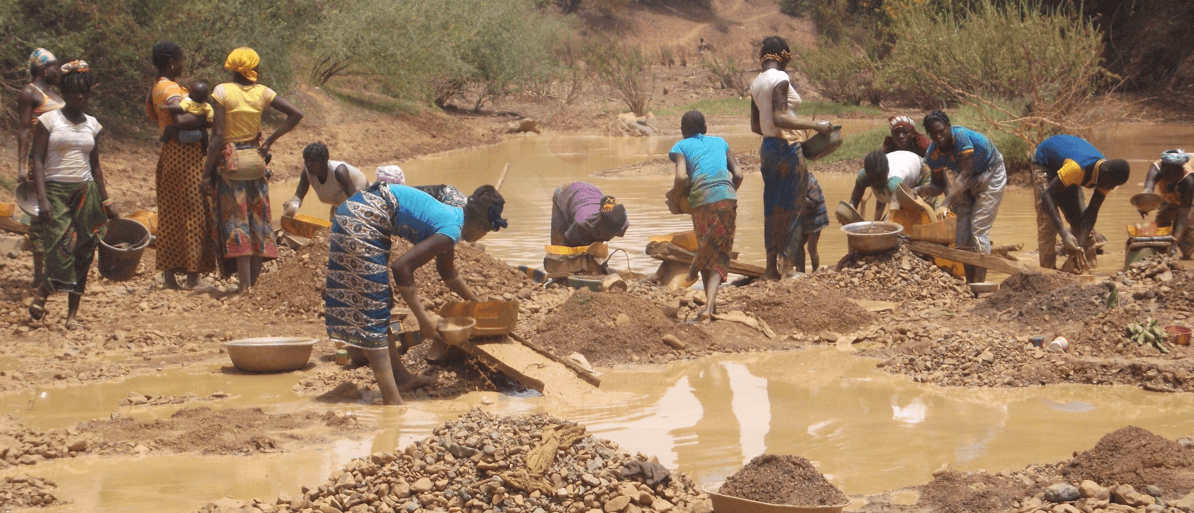
Youth Declare NAIMOS a “Complete Failure”
The Dynamic Youth Movement of Ghana (DYMOG) has taken the gloves off. In a statement released on March 1, 2026, the youth pressure group declared that NAIMOS — the National Alternative Employment and Livelihood Programme created under the Mahama administration’s renewed anti-galamsey drive — has “completely failed in its mandate to combat the galamsey menace” and is calling for an immediate state of emergency on illegal small-scale mining across Ghana.
“NAIMOS has not delivered on its promise of creating alternative livelihoods for displaced miners or significantly reducing the incidence of galamsey,” the DYMOG statement read. The group argued that the agency’s failure has allowed illegal mining to continue devastating rivers, farmlands, and forest reserves — with the destruction accelerating rather than slowing. They pointed to the continued mining of protected forest reserves and the ongoing pollution of major water bodies, including tributaries of the Pra, Ankobra, and Birim rivers, as evidence of systemic collapse.
img
38 Arrested in Eastern Region Raid
Adding urgency to the debate, Ghana Police Service and environmental enforcement officers conducted a major galamsey raid in the Eastern Region over the weekend of February 28 to March 1, 2026, arresting 38 suspects — including 17 Burkinabe nationals and 21 Ghanaians. Mining equipment, excavators, and chemicals were confiscated at the scene. The operation reflects ongoing law enforcement pressure but also underlines the cross-border dimensions of Ghana’s illegal mining problem, with nationals from Burkina Faso, Côte d’Ivoire, and other countries increasingly involved in mining networks.
The involvement of Burkinabe nationals comes at a sensitive time, just days after President Mahama referenced in his SONA the killing of eight Ghanaians by armed groups in a neighbouring country — widely understood to be Burkina Faso, where security has deteriorated sharply under military junta rule. Cross-border crime, including armed robbery and illegal mining, has intensified along Ghana’s northern and western borders.
The SONA Context
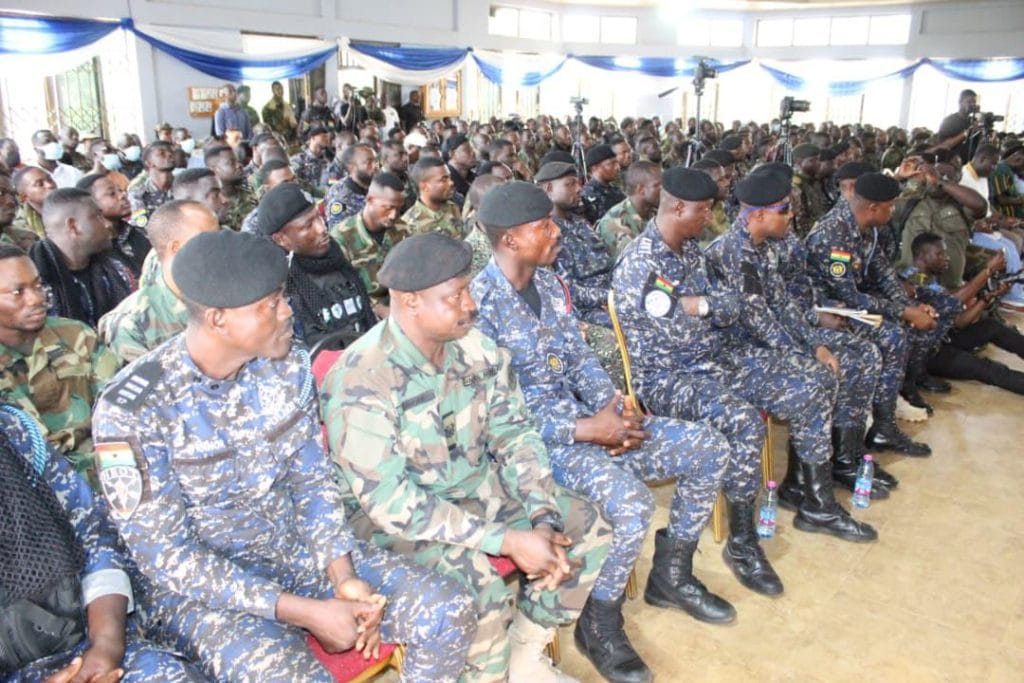
In his February 27 SONA, President Mahama acknowledged that galamsey remains a serious national challenge. He referenced the Northern Border Security Project as part of Ghana’s broader security response to threats emanating from the Sahel — but stopped short of declaring a formal state of emergency on illegal mining, instead promising continued enforcement combined with formalisation through GoldBod. The President’s framing — treating galamsey partly as a livelihoods and formalisation issue rather than purely a criminal enforcement one — is precisely what DYMOG and environmental groups reject.
Scientists and civil society groups have long warned that the damage to Ghana’s rivers and water bodies from galamsey is approaching an irreversible tipping point. The Pra River, once a major source of water for communities in the Central Region, has been rendered unusable in significant stretches. A physicist interviewed by a local outlet also raised concerns about the government’s own proposed $35 million EPA nano-copper river clean-up technology, questioning its scientific rigour and cost-effectiveness.
What Activists and Experts Are Demanding
Beyond DYMOG, a coalition of environmental advocates, traditional leaders, and water resource scientists has been pushing for a comprehensive National Galamsey Emergency Plan with four pillars: a declared state of emergency with military-backed enforcement in high-intensity zones; an accelerated livelihoods programme replacing NAIMOS with a well-funded, district-led alternative; mandatory river rehabilitation bonds for companies and individuals convicted of mining pollution offences; and a transparent public registry of all licensed mining operations, updated in real time.
The government faces a dilemma. The same GoldBod programme that is filling Ghana’s foreign exchange reserves and building the financial case for GANRAP is intertwined with the artisanal and small-scale mining sector that feeds galamsey networks. Finding the right balance between formalisation, enforcement, and environmental protection may be the defining policy challenge of Mahama’s second term.
“NAIMOS has failed in the galamsey fight. It is time for a state of emergency. The destruction of our environment is irreversible if we wait any longer.” — DYMOG statement, March 1, 2026
What is NAIMOS?
NAIMOS — the National Alternative Employment and Livelihood Programme — was established as a key plank of Ghana’s reformed approach to tackling galamsey, moving beyond enforcement-only models toward providing economic alternatives for small-scale miners and communities whose livelihoods depend on the sector. The programme was expected to create registered employment pathways, formalise artisanal operations, and partner with district assemblies to offer training, equipment, and financing for legal alternatives.
Critics have argued from the outset that NAIMOS was underfunded, lacked a coherent implementation framework, and suffered from the same coordination failures that plagued previous anti-galamsey initiatives, including IMCIM and Operation Vanguard under the NPP administration. DYMOG’s broadside represents the most forceful public repudiation of the programme since its launch.
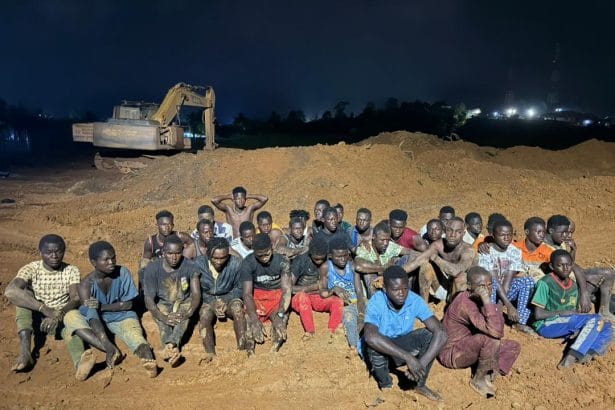
38 Arrested in Eastern Region Raid
Adding urgency to the debate, Ghana Police Service and environmental enforcement officers conducted a major galamsey raid in the Eastern Region over the weekend of February 28 to March 1, 2026, arresting 38 suspects — including 17 Burkinabe nationals and 21 Ghanaians. Mining equipment, excavators, and chemicals were confiscated at the scene. The operation reflects ongoing law enforcement pressure but also underlines the cross-border dimensions of Ghana’s illegal mining problem, with nationals from Burkina Faso, Côte d’Ivoire, and other countries increasingly involved in mining networks.
The involvement of Burkinabe nationals comes at a sensitive time, just days after President Mahama referenced in his SONA the killing of eight Ghanaians by armed groups in a neighbouring country — widely understood to be Burkina Faso, where security has deteriorated sharply under military junta rule. Cross-border crime, including armed robbery and illegal mining, has intensified along Ghana’s northern and western borders.
The SONA Context
In his February 27 SONA, President Mahama acknowledged that galamsey remains a serious national challenge. He referenced the Northern Border Security Project as part of Ghana’s broader security response to threats emanating from the Sahel — but stopped short of declaring a formal state of emergency on illegal mining, instead promising continued enforcement combined with formalisation through GoldBod. The President’s framing — treating galamsey partly as a livelihoods and formalisation issue rather than purely a criminal enforcement one — is precisely what DYMOG and environmental groups reject.
Scientists and civil society groups have long warned that the damage to Ghana’s rivers and water bodies from galamsey is approaching an irreversible tipping point. The Pra River, once a major source of water for communities in the Central Region, has been rendered unusable in significant stretches. A physicist interviewed by a local outlet also raised concerns about the government’s own proposed $35 million EPA nano-copper river clean-up technology, questioning its scientific rigour and cost-effectiveness.
What Activists and Experts Are Demanding
Beyond DYMOG, a coalition of environmental advocates, traditional leaders, and water resource scientists has been pushing for a comprehensive National Galamsey Emergency Plan with four pillars: a declared state of emergency with military-backed enforcement in high-intensity zones; an accelerated livelihoods programme replacing NAIMOS with a well-funded, district-led alternative; mandatory river rehabilitation bonds for companies and individuals convicted of mining pollution offences; and a transparent public registry of all licensed mining operations, updated in real time.
The government faces a dilemma. The same GoldBod programme that is filling Ghana’s foreign exchange reserves and building the financial case for GANRAP is intertwined with the artisanal and small-scale mining sector that feeds galamsey networks. Finding the right balance between formalisation, enforcement, and environmental protection may be the defining policy challenge of Mahama’s second term.