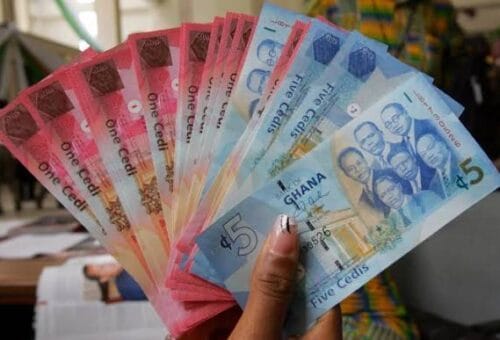
Ghanaians Overcharged GH¢1.5 Billion for Electricity — Prepaid Meters Are Draining Faster Than Ever
A damning policy review says PURC used wildly wrong assumptions to set Q4 2025 tariffs, costing consumers GH¢1.5 billion. Now the same regulator has called an emergency meeting over complaints of rapidly depleting prepaid credits — and the energy minister is promising refunds if probes confirm overcharging.

Ghana’s electricity consumers may have been overcharged by an estimated GH¢1.5 billion in the fourth quarter of 2025 — not because of any deliberate wrongdoing, but because the Public Utilities Regulatory Commission (PURC) used exchange rate and inflation assumptions in its tariff calculations that turned out to be dramatically wrong. That is the finding of a policy review by the Centre for Environmental Management and Sustainable Energy (CEMSE), which is now calling for an 11 percent tariff reduction in the first quarter of 2026 to correct the over-recovery.
The PURC projected an exchange rate of GH¢11.9735 to the US dollar for Q4 2025, later adjusting it upward to GH¢12.3715. The actual average rate for the period was GH¢10.8733 — meaning every dollar of electricity generation cost was priced as if it cost significantly more than it did. Applied across the quarter’s total electricity consumption of roughly 6,459 gigawatt-hours, with 60 percent of generation costs priced in dollars, the arithmetic produces an overcharge of approximately GH¢1.5 billion.
“Over-recoveries should be formally recognised and credited to consumers before new tariff adjustments are introduced.” — CEMSE Policy Review, February 2026
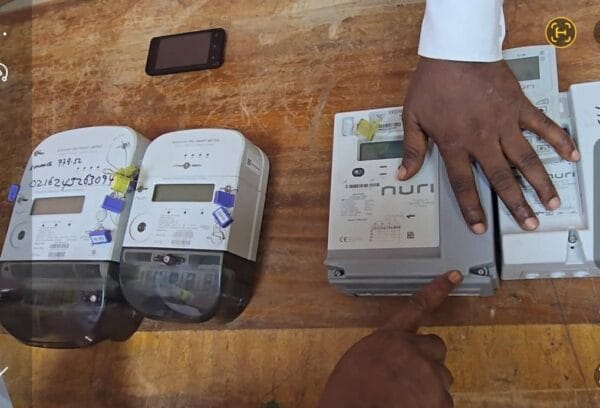
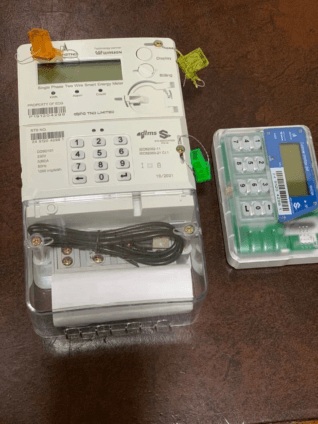
The Smart Meter Crisis — Fast-Draining Credits
The CEMSE report arrives on top of a separate but related crisis: widespread consumer complaints that prepaid electricity credits purchased after the January 1, 2026 tariff hike are draining far faster than expected. Consumers across social media and radio call-in programmes have described buying units that last only a fraction of the time they previously did.
In response, the PURC issued a formal letter on February 25 calling an emergency meeting with ECG for February 26. The regulator said the rapid depletion raised “serious regulatory, technical, and consumer protection concerns” that could affect public confidence in Ghana’s entire electricity metering system. ECG, for its part, has denied any wrongdoing, with its communications director telling Adom FM that the company only applies rates approved by PURC.
Energy Minister Dr John Jinapor directed ECG to submit a full investigative report within seven days, and pledged that faulty meters would be replaced immediately if found and that consumers would be compensated if overcharging is confirmed. “I don’t know of anyone who was ever compensated,” one social media user wrote, reflecting widespread public skepticism about whether promises would translate into action.
The January Tariff Increase — Context
The PURC implemented a 9.86 percent electricity tariff increase on January 1, 2026 under the 2026–2030 Multi-Year Tariff Order (MYTO) framework. The increase, framed as a tool to fund long-term infrastructure investment, immediately triggered pushback. The Trades Union Congress (TUC) calculated that the tariff rise effectively cancelled out the value of the 2026 public sector salary increase, leaving workers financially worse off than in 2025 despite a nominal pay rise.
Meanwhile, inflation in electricity and gas surged from 6.1 percent year-on-year in December 2025 to 14.8 percent in January 2026 — one of the sharpest single-month movements in any price category, standing in stark contrast to Ghana’s broader inflation achievement of 3.8 percent.
What the PURC Must Now Decide
The first quarterly tariff review of 2026 is due before the end of March. CEMSE argues that with the cedi now trading at approximately GH¢10.99 to the dollar and projected Q1 2026 inflation at just 3.4 percent, the economic case for a tariff reduction is compelling and the PURC’s own formula supports one. Failing to reduce tariffs while the over-recovery from Q4 2025 remains unaddressed, the watchdog warns, would seriously undermine public confidence in the regulatory system.