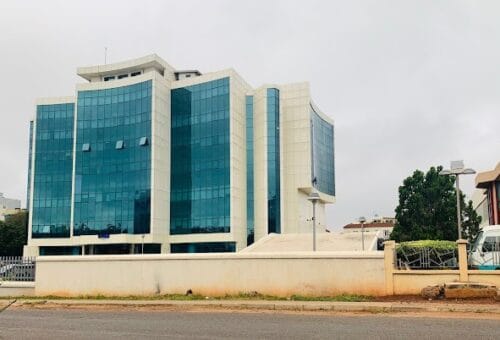
Ghana Legalises Crypto — Over 100 Firms Register Under New VASP Law as BoG Launches Sandbox and Bans Ads
Ghana's Virtual Asset Service Providers Act 2025 (Act 1154) has come into force, bringing an estimated $3 billion informal crypto market into the regulated economy. Over 100 firms have registered with the Bank of Ghana, six have entered a regulatory sandbox — and in a bold opening move, regulators have ordered all VASP advertising banned pending full licensing, with "severe sanctions" threatened for non-compliance.


How Ghana Got Here
For years, Ghana’s cryptocurrency market operated in a grey zone. The Bank of Ghana had issued stern warnings in 2018 and again in 2022 that virtual assets were not legal tender and not regulated under the Payment Systems Act. But the market kept growing anyway. By 2024-2025, Ghana ranked among the top five Sub-Saharan African countries by total cryptocurrency value received, with approximately $3 billion in annual crypto transaction volume — and an estimated 3 million Ghanaians participating in the market without institutional safeguards.
The government under President Mahama chose to regulate rather than ban. Parliament passed the Virtual Asset Service Providers (VASP) Bill on December 22, 2025, and President Mahama signed Act 1154 into law shortly after. The legislation establishes the Bank of Ghana and the Securities and Exchange Commission (SEC) as the primary co-regulators of the digital asset sector, with the Financial Intelligence Centre (FIC) and Ghana Revenue Authority also playing enforcement roles. Ghana joins Nigeria, Kenya, and South Africa in shifting from restriction to structured regulation — aligning with global FATF standards.
“This law ends years of regulatory ambiguity, bringing emerging activities within clear, accountable, and well-governed boundaries.” — Dr. Johnson Pandit Asiama, Governor, Bank of Ghana
The Regulatory Architecture
The VASP Act creates a dual-oversight model. The Bank of Ghana supervises activities related to payments, custody, and anything with implications for monetary policy or financial stability. The SEC governs virtual asset exchanges, tokenization, and investment products. The FIC handles AML/CFT (anti-money laundering and counter-terrorism financing) compliance. A newly established Virtual Assets Regulatory Office (VARO) within the Bank of Ghana will lead day-to-day supervisory work.
Critically, the law does not make virtual assets legal tender — the Ghanaian cedi remains Ghana’s sole official currency. What the law does is create a licensing pathway for crypto businesses to operate legally, subject to capital requirements, risk management standards, mandatory reporting, and the FATF Travel Rule for customer information transfer. The BoG has confirmed that detailed licensing guidelines will roll out in phases through 2026, with existing providers given transitional arrangements until the full licensing window opens.
100+ Firms Registered, Six in the Sandbox
A mandatory registration exercise conducted in July 2025 — before the law was formally passed — already captured over 100 virtual asset service providers in Ghana, offering services spanning payments, exchange, brokerage, and investment advisory. This baseline registration has given regulators an unprecedented view of the previously opaque market.
More significant is the regulatory sandbox announced at the “From Trust to Transparency” symposium — a controlled environment where innovative crypto products and services can be tested under supervision before full licensing. Six firms have been admitted to the inaugural sandbox programme, which will run for one year and cover digital asset exchange, custody, and issuance. The six firms are: Transika Ltd., One Africa Securities Ltd., Mansu Technologies Ltd., Payafrione Gh Ltd., Akuna Wallet Ltd., and Afrix Paycoin Ltd. These companies will operate under close BoG-SEC oversight and help validate the regulatory frameworks that will eventually apply to all licensed VASPs.

The Advertising Ban: Regulators Move Fast
In one of the most assertive opening moves by any African crypto regulator, the Bank of Ghana and SEC issued a joint directive on February 20, 2026 — just weeks after the law came into force — ordering all VASPs to immediately cease advertising their products to the public. Providers, including those operating within the BoG-SEC sandbox, were given 48 hours to take down billboards and all other mass marketing materials. Regulators warned of “severe sanctions” for non-compliance.
The reasoning is grounded in consumer protection. The law classifies crypto advocacy as a standalone regulated activity requiring registration with both the BoG and SEC. By enforcing this immediately — before the detailed rules are even published — Ghana is deliberately controlling the public narrative around crypto before full licensing begins. The directive also explicitly extends to celebrities and social media influencers: the SEC has warned that unlicensed promotion of crypto assets without authorisation will face strict sanctions.
What This Means for Ghana’s Digital Economy
For Ghana’s tech startup ecosystem and diaspora community, the VASP framework is potentially transformational. The law creates a “regulatory green light” for blockchain-based remittances — a significant development for the estimated 3 million Ghanaians living abroad, for whom transferring money home has long been expensive and slow. By bringing crypto platforms under BoG supervision, the government opens the door for cheaper, faster, more transparent cross-border payment solutions, potentially competing with traditional remittance corridors.
The BoG has also indicated that a Cedi-backed stablecoin remains under consideration as a future tool for monetary stability — building on the eCedi CBDC pilot and a cross-border payments trial with the National Bank of Rwanda. An operational weekly gold purchase target of approximately 3.02 tonnes through the GoldBod framework adds another dimension: Ghana’s gold-backed reserve accumulation strategy could eventually intersect with a digital asset layer, enabling tokenised gold-backed instruments.
Ghana’s public cloud market — of which crypto and blockchain infrastructure form a growing subset — is projected to reach $306 million in 2025 and grow at roughly 20% annually through 2029. The VASP law, if implemented transparently and efficiently, positions Ghana to capture a significant share of West Africa’s regulated digital asset economy alongside Nigeria — and potentially ahead of smaller markets that have not yet enacted comparable frameworks.