Ghana Cashless Society: 5 Critical Truths for 2026
Is Ghana cashless society talk realistic in 2026? We examine infrastructure, rural access & cultural attitudes. Get the honest, actionable truth here.

Can Ghana realistically go cashless by the end of this decade? With Ghana’s cashless society debate heating up in 2026, the answer is far more complicated than government press releases suggest — and small business owners, traders, and everyday Ghanaians deserve an honest conversation about it.
Where Ghana Actually Stands on Digital Payments in 2026
Ghana has made genuine strides. Mobile money transactions processed through platforms like MTN MoMo and Vodafone Cash now account for a significant share of everyday financial activity, and the Bank of Ghana has actively pushed its Digital Financial Services Policy to accelerate adoption.
But raw transaction volume tells only part of the story. The deeper question is whether the digital payments Ghana ecosystem is robust enough — and equitable enough — to support a fully cashless transition without leaving millions behind.
Mobile Money Penetration: The Good News
According to the Ghana Interbank Payment and Settlement Systems (GhIPSS), mobile money interoperability has dramatically improved since 2023, allowing transfers across networks seamlessly. This is a real win.
Urban centers like Accra, Kumasi, and Takoradi have seen merchant QR code adoption rise steadily. For many young, urban Ghanaians, paying with a phone feels completely natural by now.
The Infrastructure Gap Nobody Wants to Talk About
Here is where the honest truth gets uncomfortable. Internet penetration in Ghana, while growing, still leaves large rural populations underserved. The DataReportal 2025 Global Digital Overview placed Ghana’s active internet user rate at roughly 60% — meaning four in ten Ghanaians remain largely offline.
In the Northern, Upper East, and Upper West regions, network connectivity is inconsistent at best. A cashless system that fails when the network drops is not a system rural traders can depend on.
Cultural Attitudes Toward Cash: Underestimated and Real
Policy makers often treat cash preference as ignorance to be educated away. That framing is both condescending and inaccurate. In Ghana, cash carries deep cultural and practical significance that digital evangelists routinely underestimate.
Cash as Trust and Ceremony
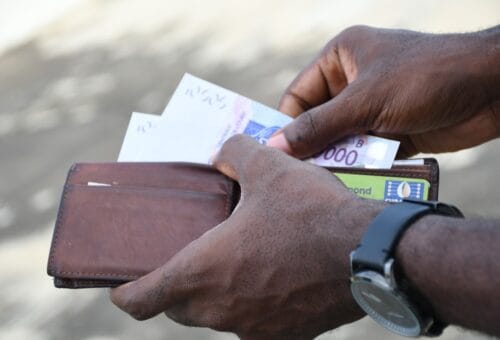
From funeral contributions to market negotiations, cash is embedded in social rituals. When a family contributes to a funeral in an Ashanti village, the physical act of handing over cedis carries meaning that a mobile money notification simply does not replicate — at least not yet culturally.
Dismissing this as backwardness misses the point. Behavioral economists have long established that financial behavior is deeply tied to social norms, and changing those norms takes generations, not government campaigns.
The Elderly and Informally Employed Population
A significant portion of Ghana’s workforce operates in the informal economy — hawkers, kayayei, small-scale farmers, artisans. Many are older, have limited smartphone literacy, and transact in small denominations multiple times a day.
Forcing a cashless framework on this segment without adequate support infrastructure is not progressive policy — it is exclusion dressed up as modernization. You can also explore how digital literacy programs for small businesses in Ghana are helping bridge this gap.
The Ghana Economy Debate: Opportunity vs. Premature Push
The Ghana economy debate around cashlessness often pits fintech optimists against structural realists. Both sides have valid points, and the truth sits firmly in the middle.
The Genuine Opportunity
- Reduced currency printing and management costs for the government
- Better tax compliance and reduced informal economy leakage
- Faster credit access for small businesses with digital transaction histories
- Lower risk of robbery and counterfeit currency for merchants
The Structural Risks of Moving Too Fast
- Cybersecurity vulnerabilities: As digital transactions scale, so does fraud exposure. Ghana recorded rising mobile money fraud cases between 2023 and 2025, per Bank of Ghana quarterly reports.
- System downtime dependency: When MoMo servers go down — and they do — a cashless economy grinds to a halt.
- Financial exclusion of the unbanked: Roughly 30% of Ghanaian adults remain unbanked or underbanked, according to industry estimates.
- Data privacy concerns: A fully digital financial trail raises legitimate questions about surveillance and data monetization that Ghana’s current regulatory framework does not fully address.
For small business owners, understanding these risks is not pessimism — it is smart planning. Learn more about protecting your small business from mobile money fraud in Ghana before scaling your digital payment adoption.
What Ghana’s Ghana Opinion 2026 Conversation Should Actually Demand
Rather than asking “are we ready to go cashless,” the more productive question is: what conditions must be met before a cashless transition is equitable?
5 Conditions Ghana Must Meet First
- Universal reliable internet coverage — including rural and underserved regions, not just urban corridors
- Robust offline payment fallback — USSD and NFC solutions that work without data connectivity
- Strengthened consumer protection laws — clear recourse for fraud victims with fast resolution timelines
- Subsidized smartphone access — or feature-phone-compatible payment systems for low-income users
- Nationwide financial literacy programs — targeted at elderly, rural, and informally employed populations
The International Telecommunication Union (ITU) has published frameworks for inclusive digital financial transitions that Ghana’s policymakers would do well to study closely before accelerating any cashless mandate.
What This Means for Small Business Owners Right Now
If you run a shop, a chop bar, a fashion boutique, or any small enterprise in Ghana, the practical takeaway is this: embrace digital payments as a supplement, not a replacement, for cash — at least for the next three to five years.
Register on multiple mobile money platforms, explore GhIPSS QR merchant services, and keep your transaction records digital for future credit applications. But do not alienate cash-paying customers who represent a real and present share of your revenue. You should also review your small business payment strategy for Ghana 2026 to stay competitive.
Key Takeaways
- Ghana has made real digital payment progress, but internet penetration and rural infrastructure gaps remain significant barriers to a fully cashless economy.
- Cultural attitudes toward cash are legitimate and deeply embedded — not simply obstacles to be overcome by marketing campaigns.
- A premature cashless push risks excluding Ghana’s informal workers, elderly population, and rural communities.
- Five critical conditions — including universal internet, offline payment fallbacks, and consumer protection laws — must be met before a cashless transition is equitable.
- Small business owners should adopt a hybrid payment approach: embrace mobile money while continuing to accept cash through at least 2028–2029.
Conclusion
Ghana is not ready for a fully cashless society in 2026 — and that is not a failure, it is an honest assessment that should guide smarter, more inclusive policy. The path forward is not to abandon the vision but to build the foundation properly. Start by auditing your own business’s payment systems today and ensuring you are serving every customer, regardless of how they prefer to pay.
Frequently Asked Questions
Is Ghana moving toward a cashless society in 2026?
Ghana is actively promoting digital payments through Bank of Ghana policies and mobile money expansion, but a fully cashless society remains unrealistic in 2026 due to infrastructure gaps, rural connectivity issues, and significant portions of the population still operating in the informal, cash-based economy.
What are the biggest barriers to digital payments in Ghana?
The main barriers include inconsistent internet connectivity in rural areas, limited smartphone access among low-income populations, mobile money fraud risks, low financial literacy in certain demographics, and deeply rooted cultural practices tied to physical cash transactions.
How can small business owners in Ghana benefit from digital payments?
Small business owners can benefit by building a digital transaction history that improves access to credit, reducing robbery risk, and reaching more customers through mobile money platforms. Registering with GhIPSS merchant QR services is a practical first step with low setup costs.
Which mobile money platforms are most widely used in Ghana?
MTN Mobile Money (MoMo) is the dominant platform, followed by Vodafone Cash (now Telecel Cash) and AirtelTigo Money. Since GhIPSS enabled interoperability, transfers between these networks have become seamless, which has significantly improved the overall digital payments Ghana ecosystem.
What can Ghana learn from other countries that went cashless?
Kenya’s M-Pesa rollout and Sweden’s digital transition both took over a decade and required heavy government and private sector investment in infrastructure, consumer education, and regulatory frameworks. Ghana’s policymakers should study these models and set realistic, phased timelines rather than pushing for rapid, top-down cashless mandates.