Ghana and Burkina Faso Sign Seven Pacts as Titao Terrorist Attack Forces Bilateral Reset
Foreign Affairs Minister Ablakwa returns from Ouagadougou with seven signed agreements — including a new counter-terrorism framework and mutual driver’s licence recognition — after eight Ghanaian tomato traders were killed in a jihadist ambush on February 14.


Eight Dead, Dozens Injured in Valentine’s Day Massacre
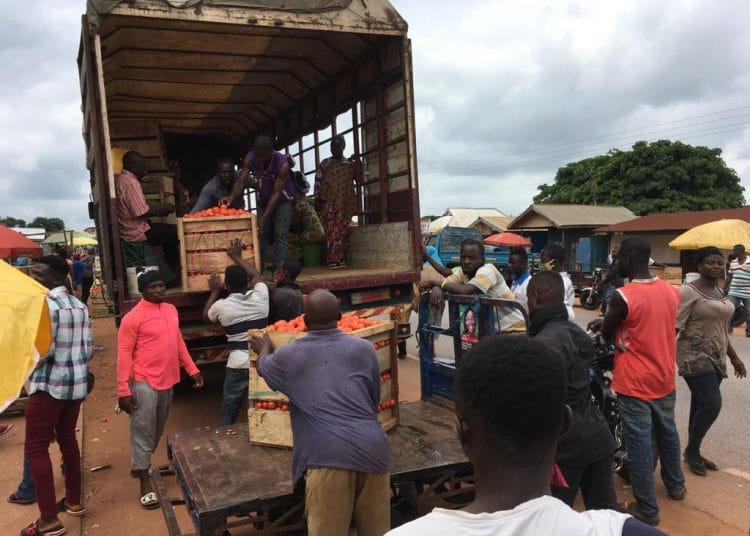
The tragedy struck on February 14, 2026, when a convoy of Ghanaian traders was ambushed by militants linked to Jama’at Nusrat al-Islam wal Muslimeen (JNIM) — the al-Qaeda-affiliated network — on a market road in the northern Burkinabè town of Titao. All eight people killed were members of the Ghana National Tomato Traders and Transporters Association, engaged in routine cross-border commerce when they were targeted.
Reports indicate the militants specifically targeted a truck carrying 18 people, suspecting them of being enemies. The men were burned alive in the vehicle, while women were ordered off before the attack. The death toll climbed from seven to eight after a critically injured victim succumbed to wounds while receiving treatment in Burkina Faso.
Ghana’s Air Force conducted an emergency airlift to bring survivors back to Accra, where they were admitted to the 37 Military Hospital. Foreign Affairs Minister Samuel Okudzeto Ablakwa visited the injured before travelling to Ouagadougou, a gesture that set the tone for the bilateral diplomatic surge that followed.
img
“We are determined as leaders to uproot this canker and make sure these violent extremists are neutralised.”
— Samuel Okudzeto Ablakwa, Ghana Foreign Affairs Minister
Seven Pacts Signed at 13th Bilateral Commission
The formal diplomatic response culminated in the 13th meeting of the Permanent Joint Commission for Cooperation (PJCC) between Ghana and Burkina Faso, held in Ouagadougou on February 20, 2026 — the most substantive session of the commission in years. Minister Ablakwa was received by Burkina Faso’s Foreign Minister Karamoko Jean-Marie Traoré and met with Prime Minister Rimtalba Jean Emmanuel Ouédraogo.
Seven agreements were signed in total, covering: a new joint security framework to formalise intelligence sharing and coordinated counter-terrorism operations; mutual recognition of national driver’s licences along the Tema-Ouagadougou trade corridor; road transit protocols; official reaffirmation of the Ghana-Burkina Faso border; joint disaster prevention and management for Bagré Dam flooding; a bilateral “no drug zone” combating illicit narcotics trafficking; and enhanced agricultural and border trade facilitation.
The Economic Community of West African States (ECOWAS) separately confirmed its support for a full investigation into JNIM, the al-Qaeda-linked network held responsible for the Titao attack and a string of similar assaults on civilian targets across the Sahel.
Trade Disruption and Food Security Implications
The Ghana National Tomato Traders and Transporters Association suspended cross-border imports from Burkina Faso immediately after the attack, disrupting a supply chain that Ghana’s domestic agricultural shortfalls have made indispensable. Tomatoes, yams, and other produce move daily between the two countries, sustaining livelihoods on both sides of the border.
Deputy Minister for Food and Agriculture John Dumelo announced that Ghana is on track for full-scale domestic tomato production by the end of 2026, with trials underway at the Tono Irrigation Scheme and in Akomadan. He projected that tomato imports from the north could fall by at least half once those irrigation schemes reach full operational capacity.
Ghana, as the host of the AfCFTA Secretariat, faces a particular obligation to demonstrate that intra-African trade corridors can be made safe. Minister Ablakwa framed the bilateral licence recognition as Ghana leading by example — a direct attempt to remove long-standing regulatory bottlenecks while simultaneously reinforcing security along the Sahel-corridor.
Security Experts and Regional Response
Security experts noted that the Titao incident is symptomatic of a wider challenge: the rapid expansion of JNIM and affiliated groups into areas previously considered too far south to be immediately threatened. Burkina Faso has become one of the deadliest battlegrounds in the global fight against al-Qaeda and ISIS-affiliated groups, and its porous 500-kilometre border with Ghana has become a growing concern for Accra.
The Ministry of Foreign Affairs placed Ghanaian embassies and high commissions in selected high-risk jurisdictions on full consular alert. Citizens intending to travel to volatile areas in the sub-region are advised to contact the Ministry or the nearest Ghanaian mission before departure.
Both governments agreed to design and adopt the new security framework as a priority, with operational details to be finalised in the coming weeks. “These agreements are not going to be decorative pieces,” Ablakwa told a press conference. “We have discussed strategies for immediate implementation and we are going to make sure they are implemented very, very successfully.”